Showing posts with label Bible Lands Trip. Show all posts

Thursday, July 12, 2007

Beqaa Valley and the Cedars of Lebanon

We traveled from Beirut to a location in the Beqaa Valley. The Beqaa Valley is the most agriculturally fertile region in Beirut. It was also home to many cities mentioned in the Old Testament such as Baal-gad and Mount Hermon.

Now these are the kings of the land whom Joshua and the sons of Israel defeated beyond the Jordan toward the west, from Baal-gad in the valley of Lebanon even as far as Mount Halak, which rises toward Seir; and Joshua gave it to the tribes of Israel as a possession according to their divisions, - Joshua 12:7


The Beqaa Valley. The right side of the picture continues on to Israel while the left side enters into Syria.


During our travel into the Beqaa Valley we went up into the mountains and saw the cedars of Lebanon. These trees are phenomenally beautiful and smell fantastic (see Hosea 14:6). I think each of us were a little bit surprised at how majestic these trees are. Truly fitting to be used to craft the Lord’s temple in Jerusalem (see 1 Kings 5:5-6). I was shocked to learn that they grow at the rate of only 1 centimeter per year. Many of the trees we saw were no less than 3000 years old. Amazing.


In a forest of beautifully smelling, Cedars of Lebanon


Through your servants you have reproached the Lord, And you have said, 'With my many chariots I came up to the heights of the mountains, To the remotest parts of Lebanon; And I cut down its tall cedars and its choice cypresses. And I will go to its highest peak, its thickest forest. - Isaiah 47:24


The righteous man will flourish like the palm tree, He will grow like a cedar in Lebanon. - Psalm 92:12


The voice of the Lord breaks the cedars; Yes, the Lord breaks in pieces the cedars of Lebanon. - Psalm 29:5

Wednesday, July 11, 2007

Moses, Baby Jesus and the Pyramids

Myself and another member of my team got up early one morning before our day really began to try to beat the heat and the crowds and see some of historic Egypt. While obviously sightseeing is NEVER one of our objectives when we travel for ministry, every once in a while we find a few hours in the schedule that are available and we try to squeeze something in. I was very fortunate on this trip.

Beating the heat turned out to be harder than I anticipated. Even early in the morning it is already roasting. In the past I had often wondered "What are the Israelites problem? God rescued them from Egypt and all they do is complain and turn to idols. What is the deal?

After having now been to Egypt I have a whole new understanding for what the Israelites endured during their time of slavery and the subsequent exodus. The country is so hot and so sandy, I cannot fathom how they survived wondering for 40 years in the desert. Add to that a strict diet of manna and I can now begin to understand why they always seemed so grumpy and constantly made poor decisions (although it certainly doesn't justify or excuse their behavior).

We first went to the alleged location that baby Moses was found hiding amongst the reeds of the Nile:

Now a man of the house of Levi married a Levite woman, and she became pregnant and gave birth to a son. When she saw that he was a fine child, she hid him for three months. But when she could hide him no longer, she got a papyrus basket for him and coated it with tar and pitch. Then she placed the child in it and put it among the reeds along the bank of the Nile. His sister stood at a distance to see what would happen to him. Then Pharaoh's daughter went down to the Nile to bathe, and her attendants were walking along the river bank. She saw the basket among the reeds and sent her slave girl to get it. She opened it and saw the baby. He was crying, and she felt sorry for him. "This is one of the Hebrew babies," she said. Then his sister asked Pharaoh's daughter, "Shall I go and get one of the Hebrew women to nurse the baby for you?" "Yes, go," she answered. And the girl went and got the baby's mother. Pharaoh's daughter said to her, "Take this baby and nurse him for me, and I will pay you." So the woman took the baby and nursed him. When the child grew older, she took him to Pharaoh's daughter and he became her son. She named him Moses, saying, "I drew him out of the water."
- Exodus 2:1-10


The round well is the location that Moses was allegedly found. The Nile has changed course over thousands of years but looking down the round well there is still water today. The wall is supposedly the wall to Pharaoh's palace. I am a bit skeptical as to the authenticity of this historic site but the Egyptian Antiquities Department believes it is legitimate.


When they had gone, an angel of the Lord appeared to Joseph in a dream. "Get up," he said, "take the child and his mother and escape to Egypt. Stay there until I tell you, for Herod is going to search for the child to kill him." So he got up, took the child and his mother during the night and left for Egypt, where he stayed until the death of Herod. And so was fulfilled what the Lord had said through the prophet: "Out of Egypt I called my son." - Matthew 2:13-15


The exact location where Jesus and his family hid. There is now a church over the location so the marble floors were added after Jesus was gone. I am also skeptical about this site but the Egyptian Antiquities Department has certified it as legitimate.


One of the 7 wonders of the world


Camels are not nearly as docile as horses.


Fun Fact of the Day: The odd colored stones at the top of the pyramid are not the original stones. The original stones were removed in the 18th century to build a mosque for the ruler of Egypt.

Thursday, April 12, 2007

Photos from the Holy Lands

I've received a lot of positive feedback regarding the photos that I posted during my trip to the Bible Lands last January (Those photos can be viewed by CLICKING HERE). I wanted to recommend a great resource to everyone that I myself have found to be very helpful.

Todd Bolen is a Professor of Biblical Studies in Israel. Over the past 10 years, Todd has traveled to virtually every place mentioned in the Bible numerous times. (Okay, that may be a slight exaggeration but it sure seems like it). Each time he goes he takes new photographs so that he always has the best possible photographs (since conditions change) of a biblical site.

Todd has compiled thousands of these photographs into digital format and many can be viewed for free by visiting Bibleplaces.com and then clicking on "The Sites." Here you can peruse many of the photographs. But if you're like me, you want more.

When I returned from my trip I discovered that several of my photos didn't turn out the way I wanted. The lighting was bad or I was at the wrong angle. After speaking with my professor, I discovered that from Bibleplaces.com you can purchase the complete collection of photographs from the Holy Lands for a very reasonable price ($189.00 USD I believe - CLICKING HERE will take you to the ordering page).

I chose the 2 DVDs instead of the 10 CDs and when they arrived in the mail I was blown away. Not only were all the photos there, neatly organized by location for easy reference, but there was so much more. Perhaps the best "bonus" feature was that every location had a fully prepared Powerpoint presentation already made. The slides of the Powerpoint already contained the photos and their locations (so you know what you're looking at) and many of them had tons of information written in the notes section. Theoretically you could insert the disk, open up Powerpoint and begin teaching.

I've never met Todd personally and I have nothing to personally gain by endorsing these products, but I cannot articulate how highly I recommend these discs. Reading about a place in my Bible and then being able to visually see that exact location has really taken my study to the next level.

If you are in a teaching position or are a visual learner, like myself, these discs should be a mandatory part of your reference library, but you don't have to take just my word for it.

Tuesday, January 23, 2007

Colosseum, Roman Forum, Mamertine Prison

***Well this is it, the last post of this trip. It has been a long, and amazing 3 1/2 weeks. We have successfully made it home in one piece, with all of our luggage, and Emily and I are feeling much better. We appreciate all the prayers and emails of encouragement we received while we were gone. We are really looking forward to being able to teach to others what we have learned, in the near future.***

Sunday was spent seeing a final few sites in the city of Rome. We started out at the Colosseum.


I learned two interesting facts about the Colosseum. First, it hadn't even started to be built until 72AD so Paul wouldn't have seen it. Secondly, it wasn't finished until 80Ad and since Nero was already long dead by then, we can eliminate the myth that Nero killed Christians in the Colosseum.


This is an inscription on the Arch of Titus which was erected in 81 AD. I found this fascinating. Look closely at the inscription. It depicts the looting of Herod's Temple in Jerusalem by the Roman army after it's destruction in 70AD. Notice the menorah, the table of showbread and the two silver trumpets.


This is a view of the remains of the ancient Roman forum (marketplace).


The ashes of Julius Ceasar are here and people still pay their respects.


This is the "Milliarium Auream" or "Golden Milestone"(at least the base of it). Remember the phrase "All Roads Lead to Rome?" Well this is where mile marker zero was.


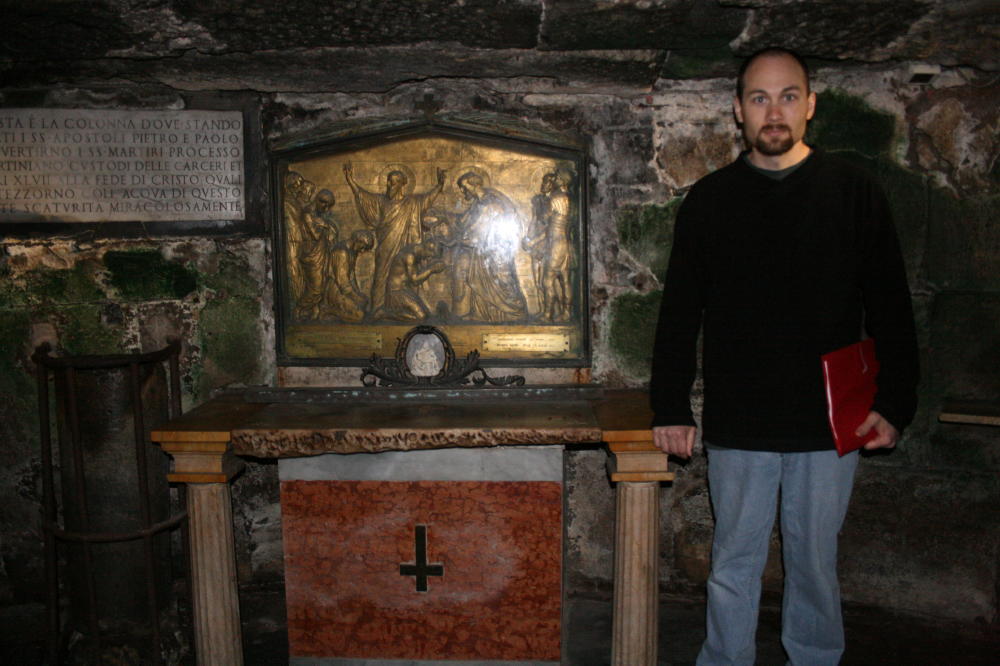
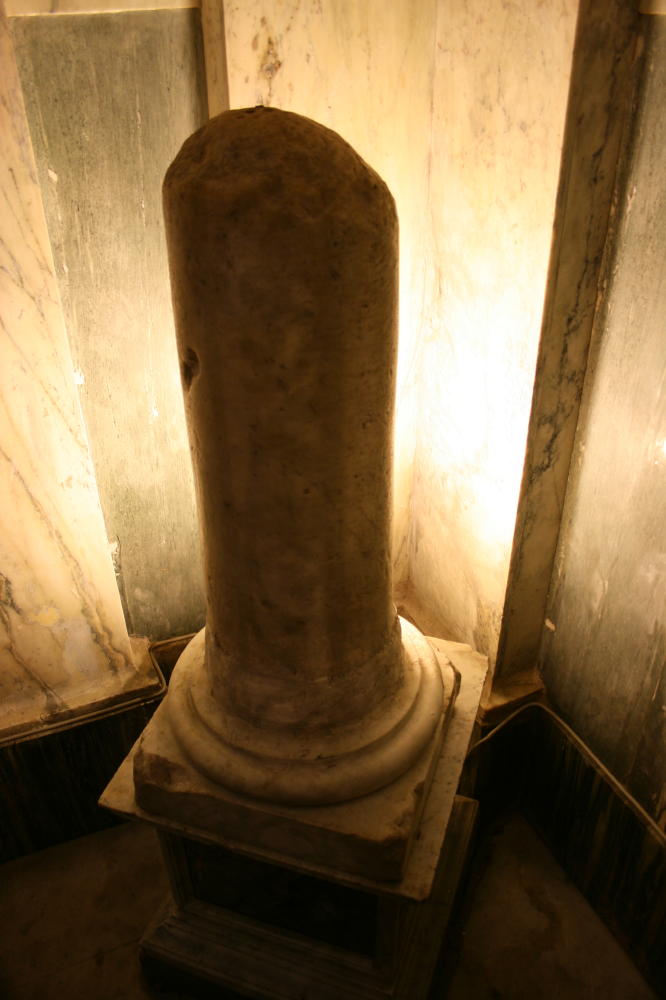
Perhaps the highlight of the day was seeing the Mamertine prison. This was the prison Paul (and probably Peter) were imprisoned in right before their executions. (Not to be confused with the apartment prison Paul stayed in during his first Roman imprisonment). Two things to note, first I'm 6 feet tall and my head is touching the ceiling. Secondly, the gray post on the left side of the picture is where the chains would have been attached to.


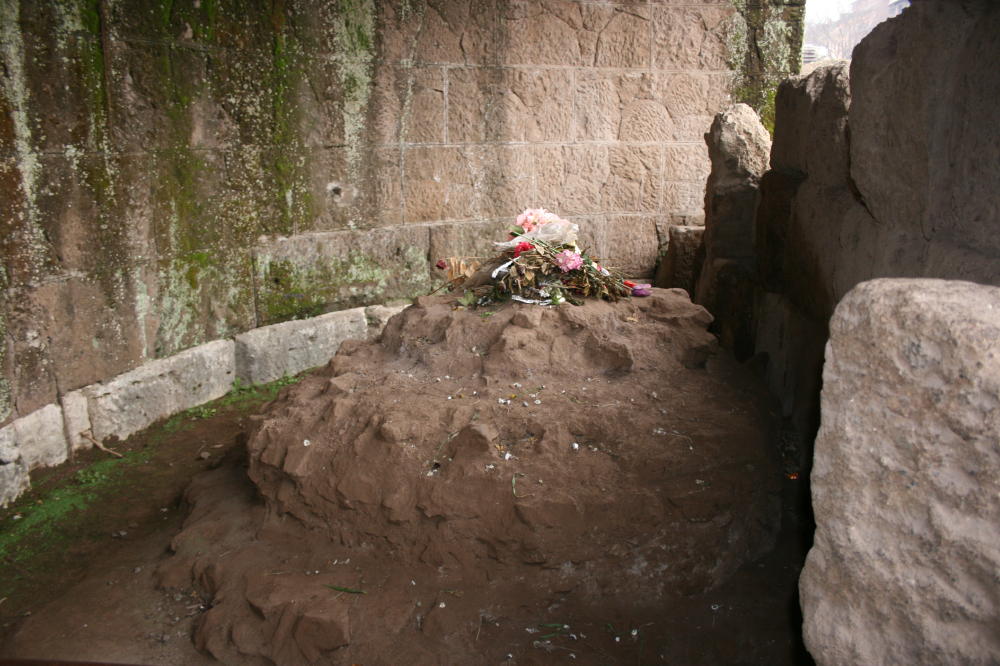
This is the only flat space in the entire cell. It is very probable that this is the exact location Paul wrote 2nd Timothy from.


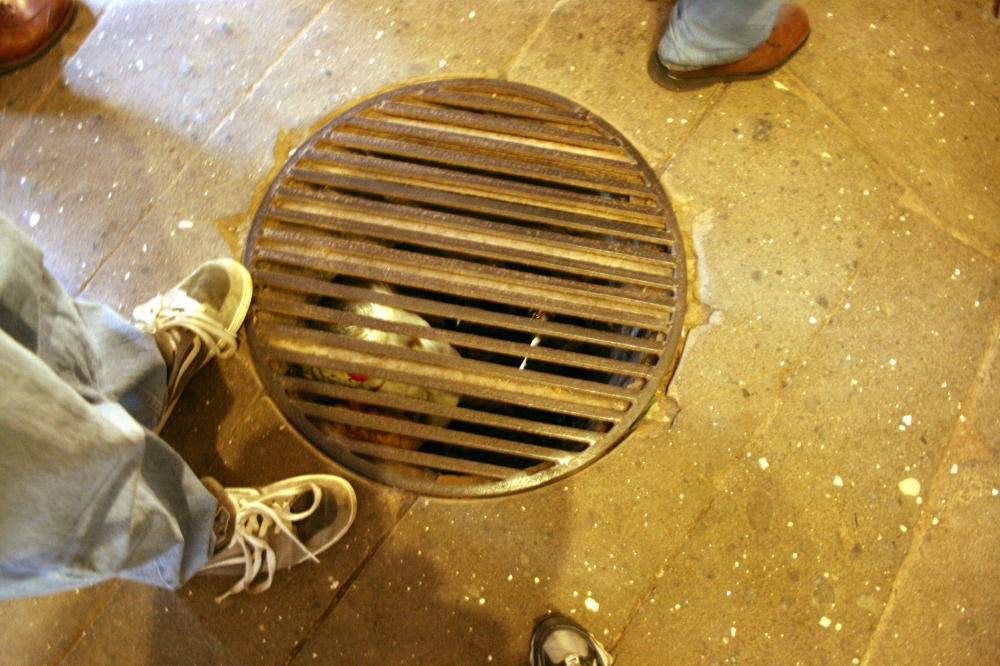
For visitors there is now a convenient staircase but Paul (and Peter?) would have been lowered down, and received food through, this hole in the ground. (The white object you see is a person in the cell area).

St. Paul's Basilica (Burial Site) and Three Fountains (Execution Site)

After spending the morning at the Vatican we journeyed just outside the city limits to two of the sites I was really looking forward to; the execution and burial locations of Paul. It was much more intense than I was expecting. Probably because for the previous 3 weeks we had been recreating his every step, reading passages from the Bible in their cities of destination or origin, and these two locatoins are where it all ended.

While visiting these two sites the irony was not lost on me that Paul started out as a persecutor of Christians and then died as a persecuted Christian. I wonder if this would have been some form of closure for him for the guilt he surely felt at times?


These are the stones Paul walked on from his holding cell as he was marched to his execution spot.


This monument stands over the spot that church tradition says he was executed at. Because Paul was a Roman citizen, he couldn't be crucified. (Peter was not a Roman citizen.) Therefore he was beheaded which was seen as much more humane.


Church tradition says that Paul's head bounced three timies and in each location a fountain sprang up. There is an altar like this one in each of those three locations. (Paul's execution location is now a monastery). Considering that these fountains are about 30 feet apart from each other I'd say that it'd be just about impossible for this to be true, but it's interesting non-the-less.


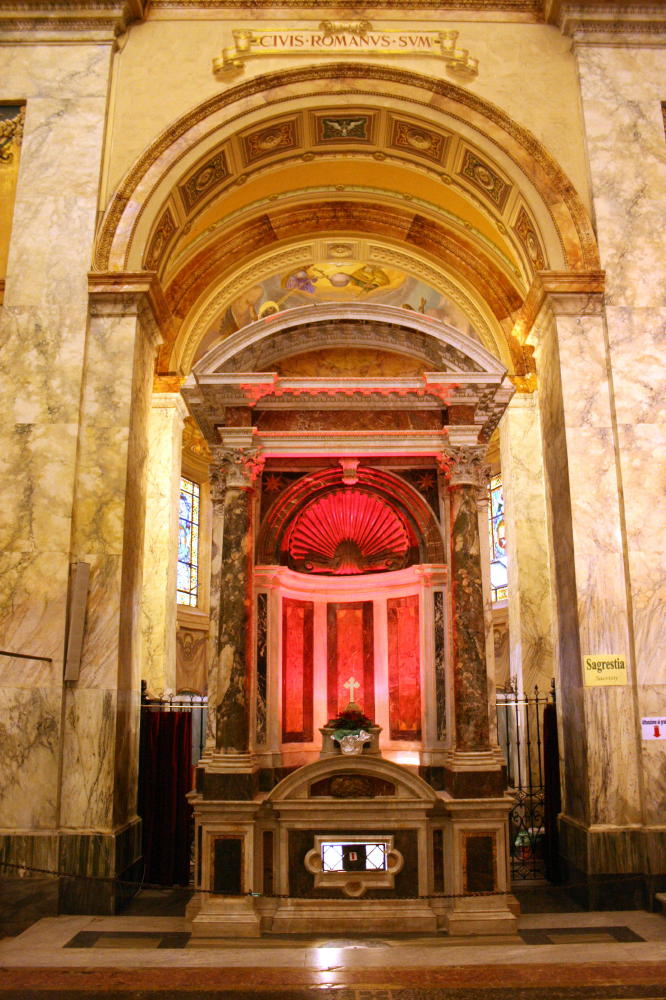
After his death one of his friends in Rome took his body a few miles down the road to her family burial location. St. Paul's Basilica now stands over that location.


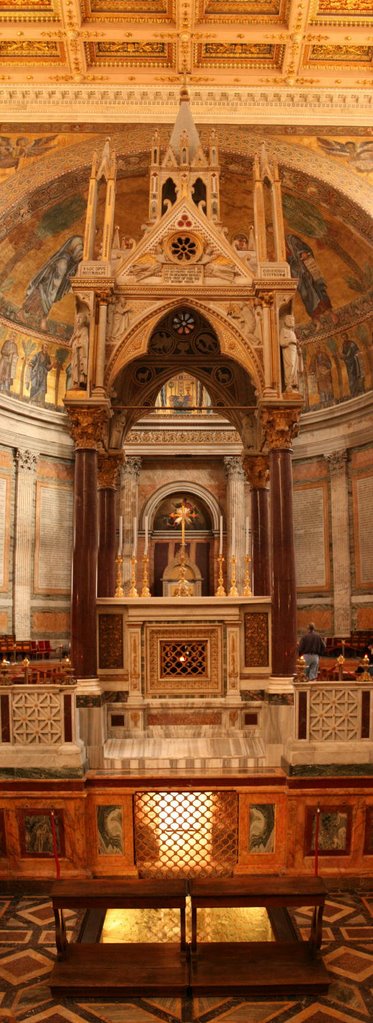
This altar stands over the spot Paul's body is located.


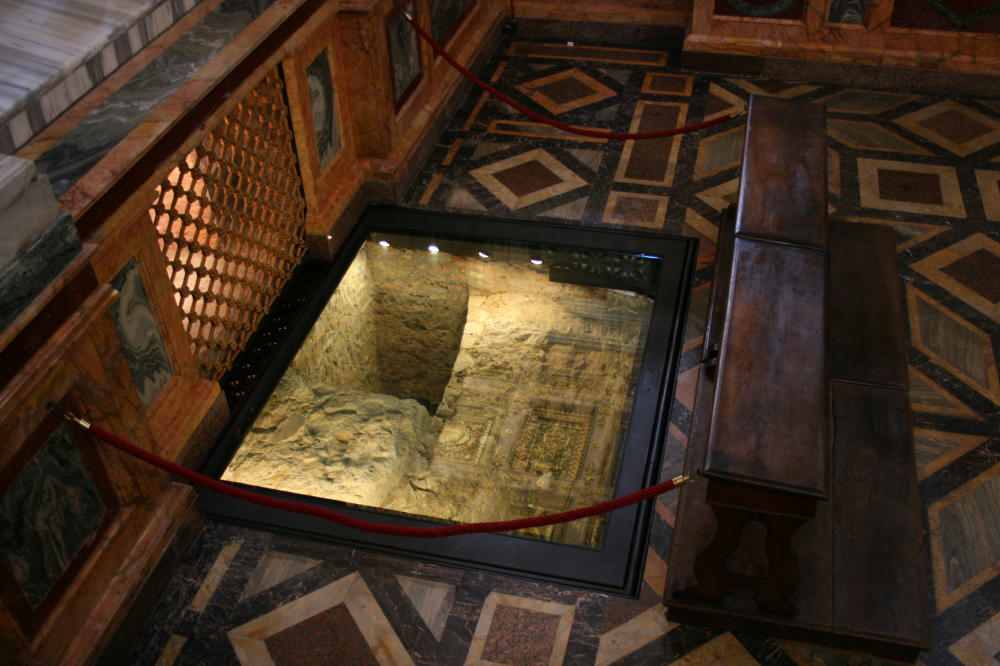
This is as close as you can get to Paul's coffin.


Scientists have identified Paul's coffin because it has these words on it which mean "Paul, Apostle, Martyr." However for some reason they are hesitant to open it to verify that Paul is in there. (I guess the only way to verify would be if the neck bone is severed than it's probably Paul but if it's not than you got the wrong guy.) Why won't they do this? Is it perhaps because of the loss revenue if it isn't him?

Monday, January 22, 2007

The Vatican

Saturday was a very busy day in Rome. The first half of it was spent touring the Vatican. While I'm not going to spend the time right now to explain the numerous reasons why, it's safe to say I'm not Catholic. That being said I was very interested in seeing the Vatican, especially since it has had such a huge impact on history. I had mixed reactions. On one hand I was wowed by the sheer splender of the place. The architecture and paintings are stunning. On the other I was saddened. It seemed so spiritually empty. So many rituals but no passion. One of our group members went to take communion in St. Peter's. The Priest asked him if he was a Catholic. He responded with "I'm a devout follower of Jesus Christ." The Priest again asked him "But are you a Catholic." He responded with "I'm a Christian." "Then you may not take communion" and he walked away. Truly Sad.


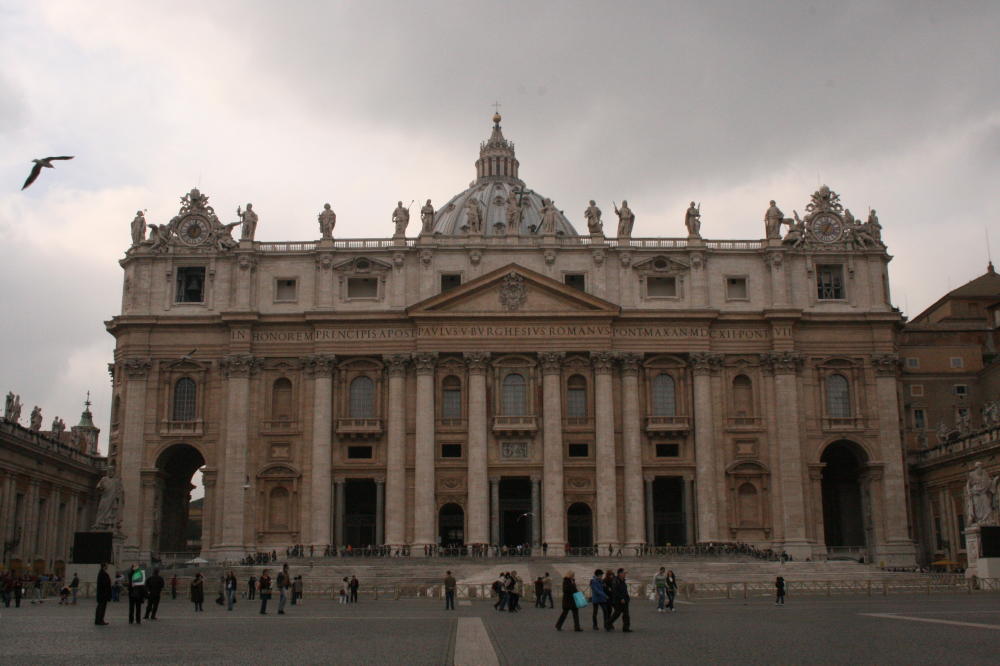
Photo of St. Peter's taken from the square. St. Peter's was built partly as a statement of the counter-reformation.


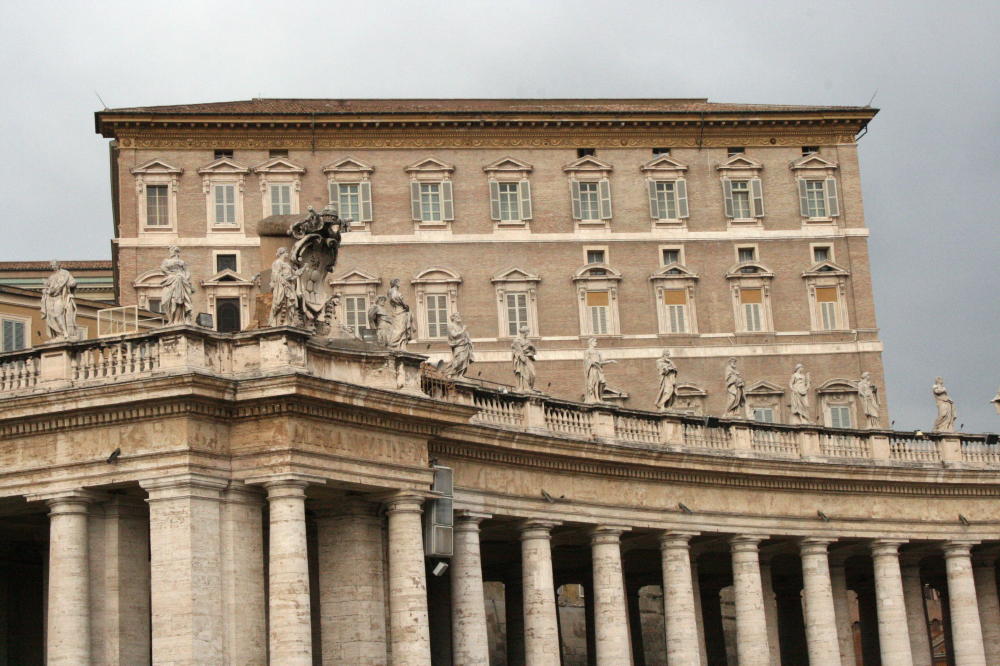
If you look at the four yellow windows, apparently the Pope lives in the second one from the right. (At least I overheard a tour guide say that).


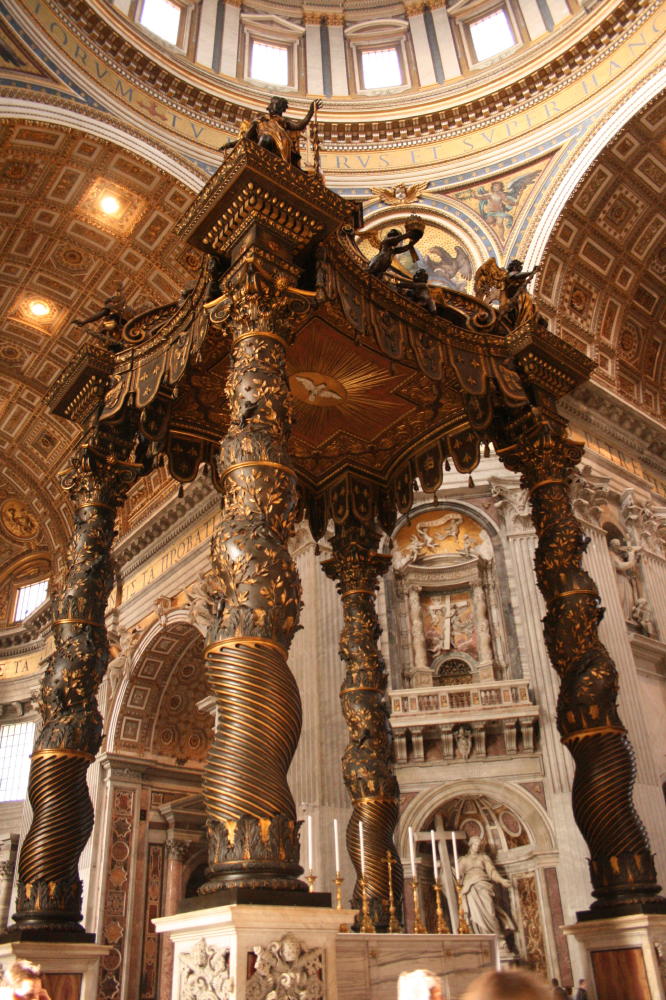
This is the Papal altar where the Pope gives mass. It is also the alledged burial site of Peter. Traditionally on June 29th (64 AD or 67 AD depending on your view), church history holds that both Paul and Peter were martyred. Peter was crucified upside down (alongside of his wife) at the Circus of Nero which was just outside of present day St. Peter’s. Excavations have found the bones of a 60ish year old man from the 1st century AD have been found under the altar but how can one know if they belong to Peter?


Embalmed bodies of past Popes (such as this one of Pope John XXIII of Vatican II fame) are found throughout St. Peter's for devout Catholics to pray to.


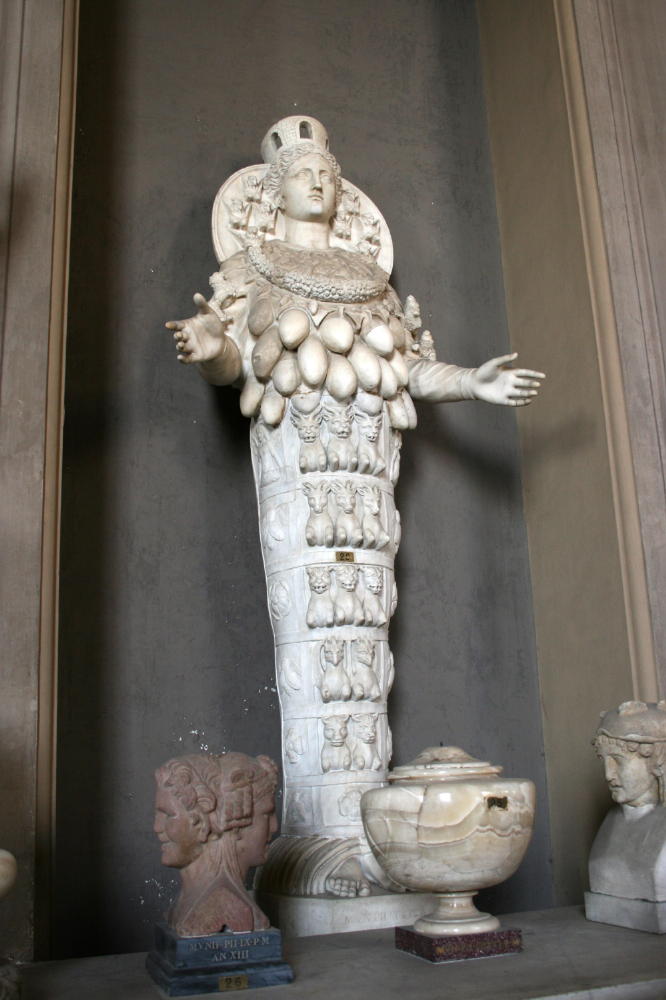
While walking through the Vatican museum I was disturbed to see many statues of various dieties such as this one of Artemis. Why would you have images of false gods in the Vatican?


This is a double edged sword found on a statue. I included this photo because this is the type of sword used to execute Paul.

Sunday, January 21, 2007

Ostia Antica and the Appian Way

We successfully made it from Athens to Rome very early friday morning. Unfortunately Rome doesn’t have as much internet access as I was hoping for so these last three posts are a bit late. (I'll post one now and the remaining ones tomorrow when I get back to the States.)

After landing in Rome we immediately traveled down to Ostia Antica. Ostia was the ancient port city for Rome. Paul’s journey into Rome started down in the boot of Italy so he wouldn’t have come in through Ostia. However, if Paul was released at the end of his two year imprisonment (which I believe he was) and if he did travel on to Spain (which some of the Epistles hint at and Church history states that he did) than he would have most likely departed from this seaport.


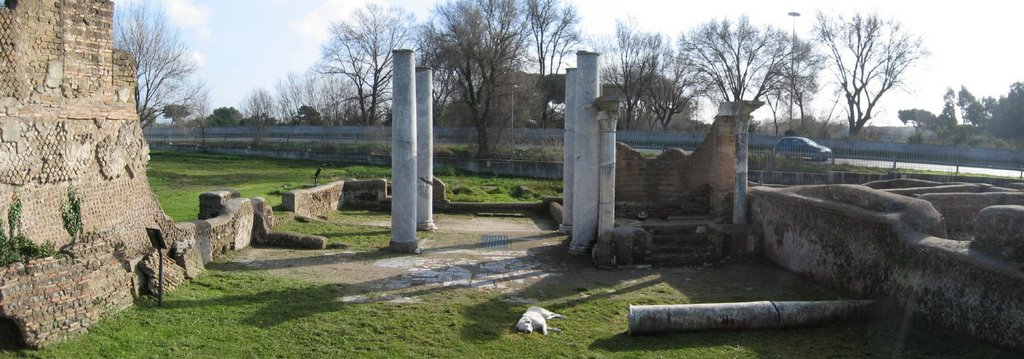
Ostia has one of the few known (and best preserved) synagogues from the 1st century AD in the Roman world.


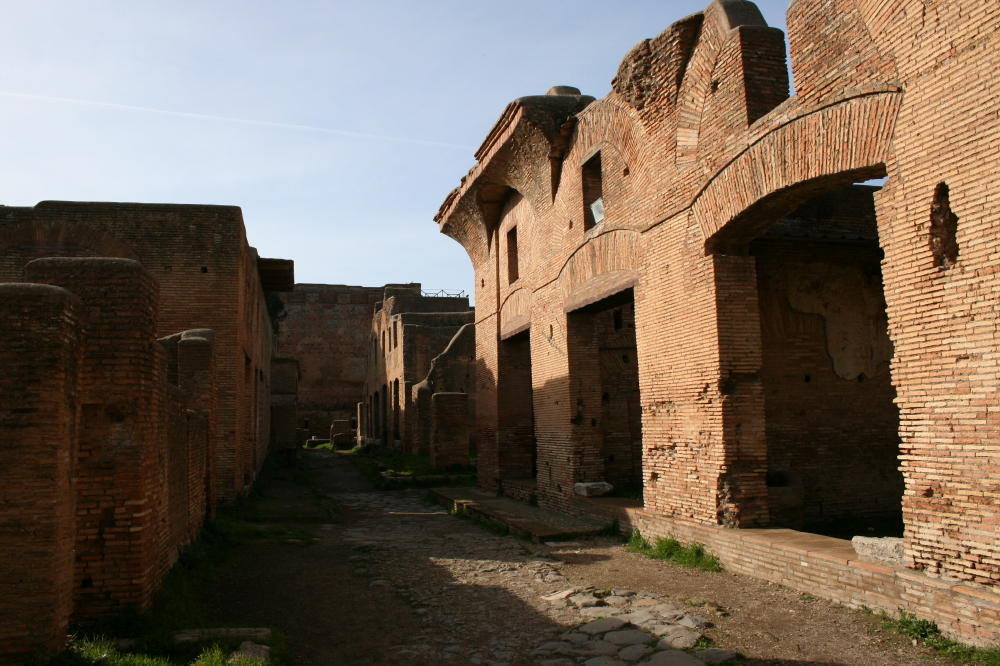
The early church (pre-Constantine) in Rome met in one of three locations: villas, synagogues or apartment blocks. Below is the picture of the remains of an apartment block. Never higher than 50 feet, apartments offered absolutely zero privacy. Since the poorest lived on the top floors, it is likely that’s where the Christians met as well.


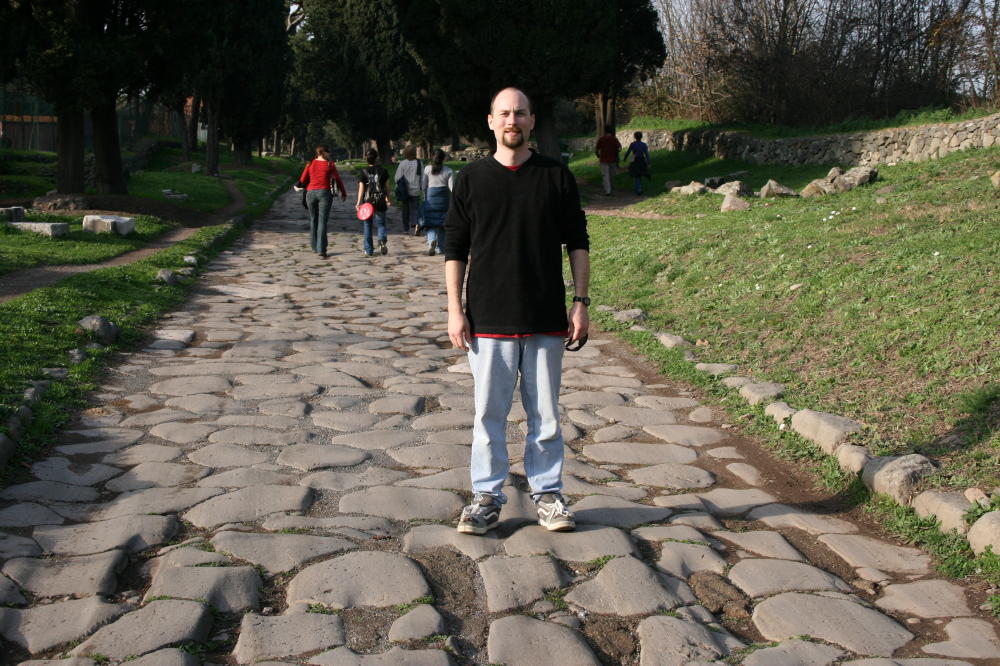
We then left Ostia and drove to within a few miles of the city walls of ancient Rome and walked the final two and a half miles of the Appian Way which leads into Rome. This is the road Paul took to enter Rome.

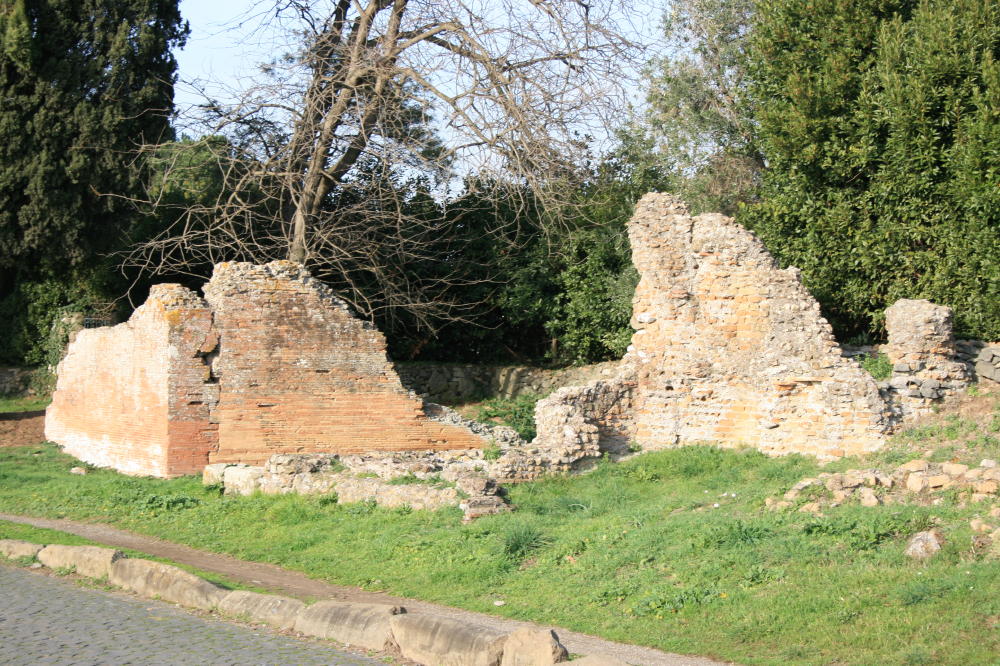
Roman law mandates that the dead are buried outside of the city. As Paul was walking up the Appian Way and about to enter into Rome he would have seen thousands of graves such as the one below lining the road. As he was journeying to Rome a prisoner to be tried and likely executed, I imagine this was incredibly difficult emotionally.


This is me on the ancient steps of the Appian Way, just a few miles outside of Rome. Paul walked these very steps.


Hundreds of thousands of graves like this one, line the entrance into a city.

Thursday, January 18, 2007

Athens

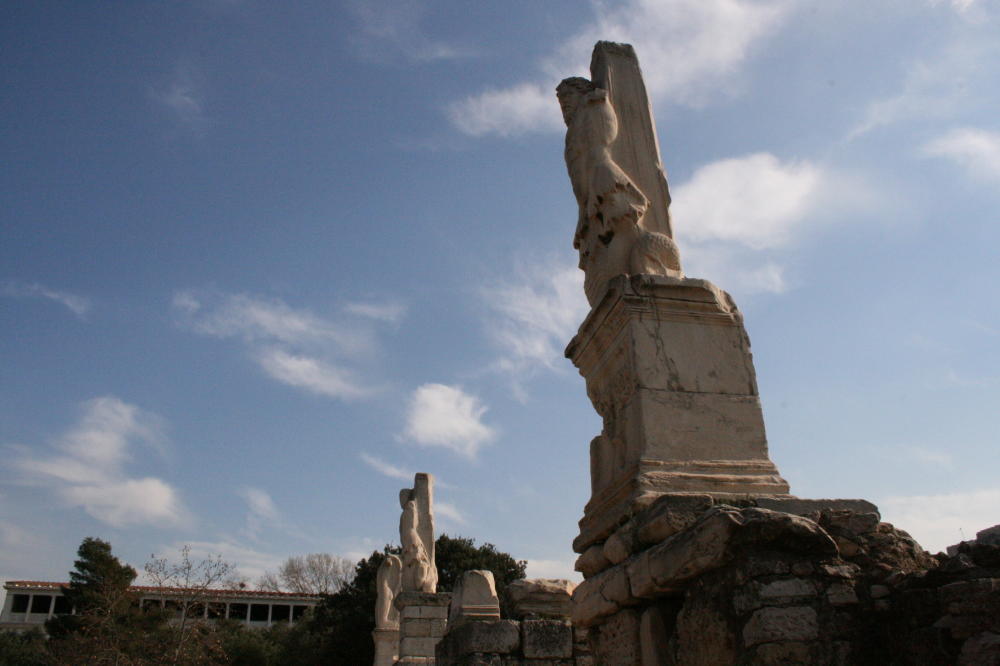
We visited the city of Athens today. Interestingly Athens, like Rome, Istanbul and Lisbon, has 7 hills in the city. I also found in interesting that there are no skyscrapers in the city. I couldn’t find any building higher than 6 to 10 stories tall. They don’t want anything coming close to the height of the acropolis I guess.


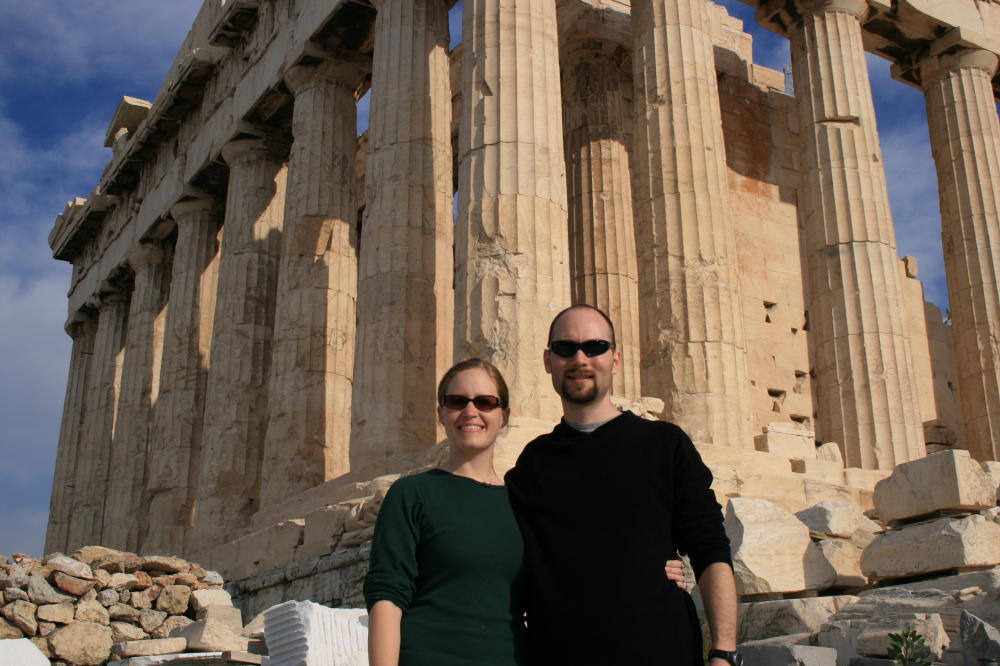
Emily and I in front of the world famous Parthenon.


Climbing to the top of Mars Hill.


This is Mars Hill from the Parthenon. Notice the agora at the far right of the photo.


Acts 17:16 “While Paul was waiting for them in Athens, he was greatly distressed to see that the city was full of idols.”

These are just a few of the idols that Paul would have walked by. It was said that in ancient Athens it was easier to find an idol than a human. Later in the day we walked through the National Museum of Greece in Athens and it was packed full of idol statues found during excavations. I can easily see why Paul would have gotten so upset.


As we realized in many other sites, there is such a deeper understanding of the Scriptures having actually been here. I’m realizing things that never noticed before. For example, as Paul is defending his case against the aeropagus (the court responsible for defending Zeus against new ideas), he says:


Acts 17:24 “The God who made the world and everything in it is the Lord of heaven and earth and does not live in temples built by hands”


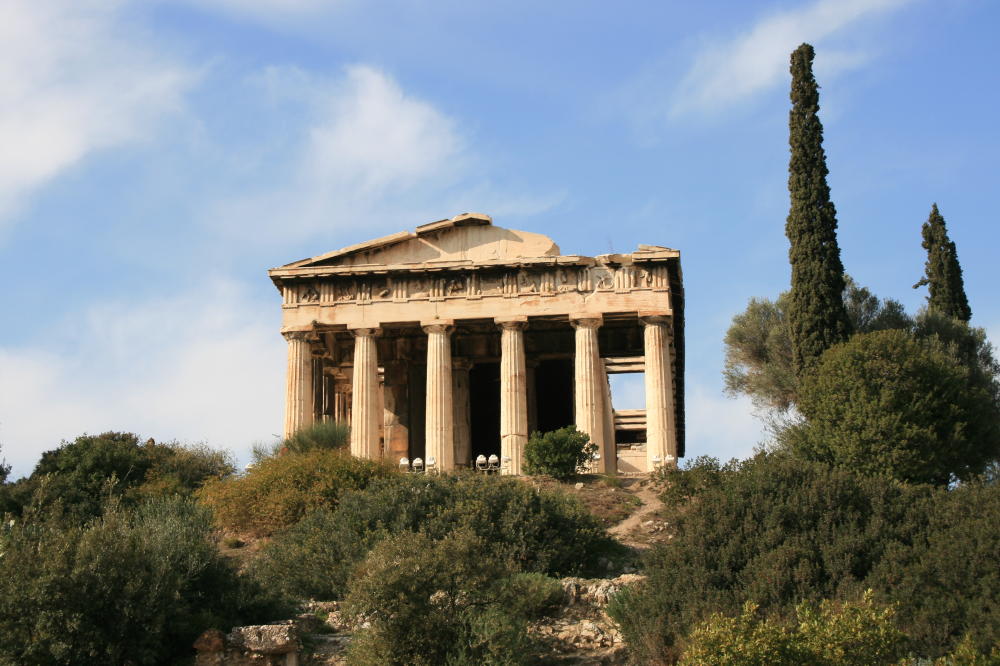
Paul would have been saying this less than 100 yards from the temple to Apollo. Not only that but right over his shoulder the aeropagus would have been looking directly at the temple to Athena (now known as the Parthenon) looming against the skyline. This would have been a very clear message to the court. There are tons of other examples of this in the passage.

Wednesday, January 17, 2007

Corinth, Isthmia, and Cenchreae

We visited Isthmia, Cenchreae and Corinth today. Isthmia is where the famous Isthmian games of ancient times originated and Cenchrea is mentioned in both Romans 16 and Acts 18 as the harbor Paul used coming in and out of the Corinth area. But since Corinth is such an important Biblical site, I'll keep my post focused there.


This is a view ALMOST from the top of Acro-Corinth where the Temple of Aphrodite and her 1000 temple prostitutes were. Sailors would come into port and hike two hours up a grueling path just to ...um ... visit with the temple workers. In the background nestled in the mountains is the city of Delphi.


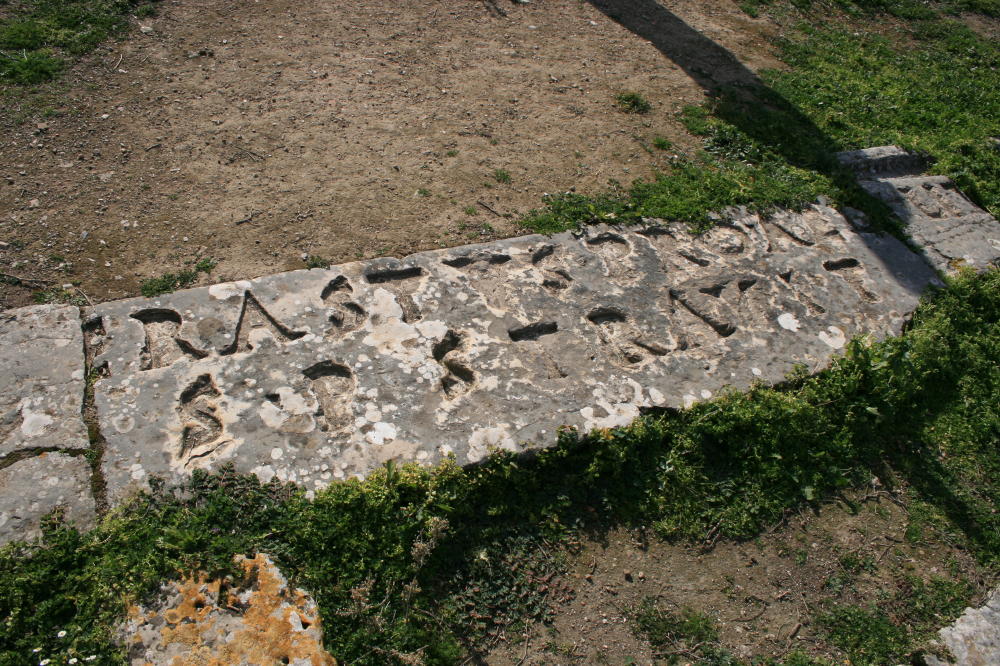
This is a very important inscription. It used to be filled with bronze letters but those were stolen. It reads "Erastus in return for his aedileship [a top city official position] laid [this pavement] at his own expense." Due to several factors such as Erastus being a very uncommon name as well as the job description we are virtually certain this is the samae Erastus of Romans 16:23 and 2 Timothy 4:19.


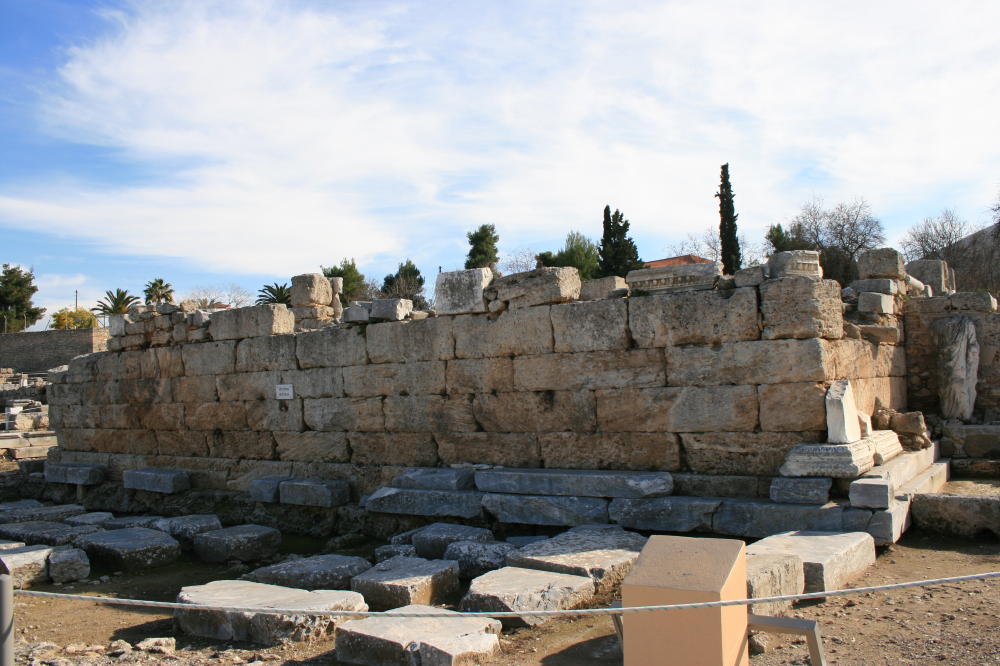
This is the Bema seat that Paul would have stood before Gallio at. This was a huge event because when Gallio refused to hear the case, he was acknowledging Christianity as a part of Judiasm (which was a protected religion). When the Roman governnment realized Christianity was something very different several years later, that is when the persecution began.


This is the Corinth Canal. It was built in the 1800's so that they no longer had to put boats and cargo on rollers to get across the isthmus.


Here is one of the few known busts of the infamous Nero. Do you think perhaps his insanity was due in any small part to the fact that he had enormous ears? (Click on the photo to see what I mean).

Tuesday, January 16, 2007

Delphi

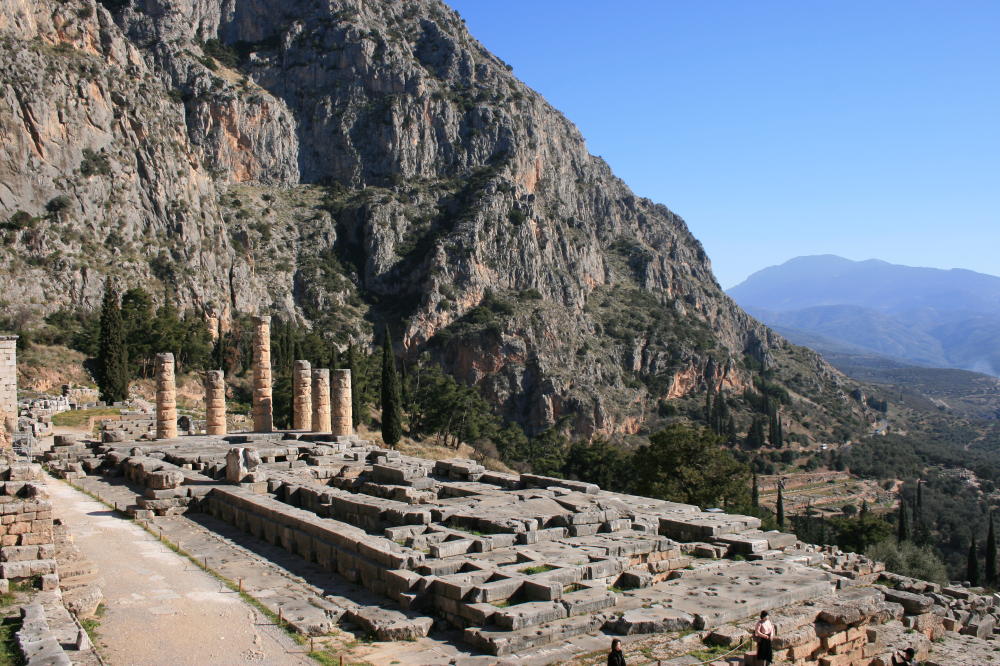
Delphi. For those familiar with it the name is synonymous with evil. If Jerusalem was the throne of God, than Delphi was the seat of Satan. This was the center of all ancient cult worship. This is where people would come from all over the known world every year to consult with the future-telling oracle. I don't have enough time to really go into all the details, but let's just say 2000 years ago you probably wouldn't want to raise your kids here.


This is the Temple to Apollo and the center of the cult city. People would hand a priest a written question to ask the oracle. The priest would then enter into the temple where the oracle was sitting in a special chamber. Interestingly this chamber was directly over a fissure in the earth that emitted noxious vapors. These vapors would cause the oracle to utter nonsense words which would be interpreted by the priests. (These interpretations were very vague). The oracle could never be wrong.


This is the entrance to the oracle chamber.


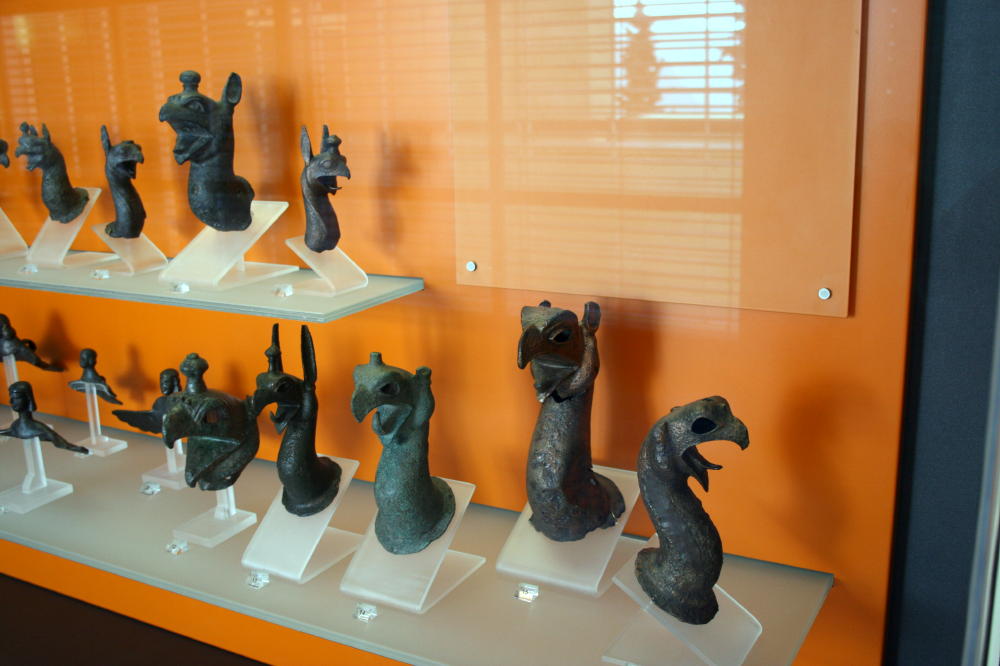
We walked through the Delphi museuem which is loaded with artifacts from the cult days. You can still very clearly feel a strong sense of demonic oppression in certain parts of the museum.