Tuesday, January 02, 2007

Pisidian Antioch

After several hours of driving (I can't believe Paul walked all this way), we finally arrived. We drove through the city to the ruins of ancient Pisidian Antioch.


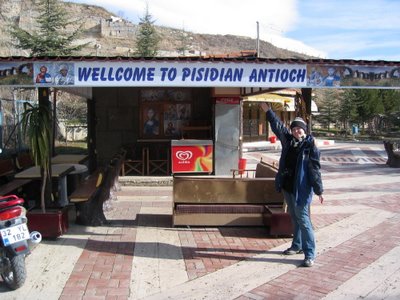
Welcome to Pisidian Antioch


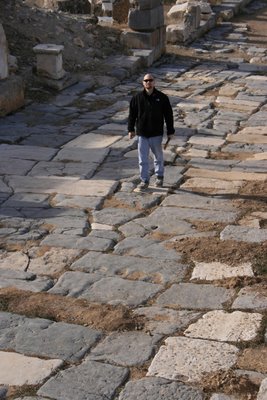
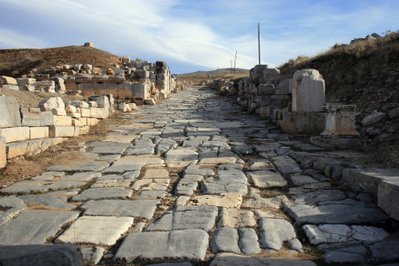
This is the main road in ancient Pisidian Antioch


I'm walking in Paul's footsteps


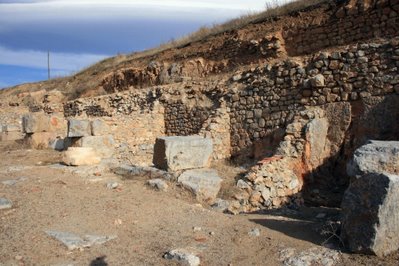
These are the remains of shops at the main entrance to the city. Kind of like the ancient version of a mall.


These are the ruins of Temple to Ceasar Augustus.


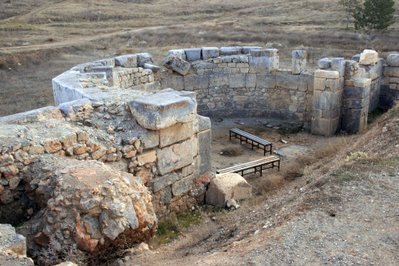
This is all that remains of a Basilica from the 4th century AD. It was known as the seat of Optimus, the Archbishop of the province of Pisidia who represented Antioch at the council of Constantinople in 381 AD. Many people believe that the synagogue Paul spoke at in Acts 13 is buried beneath the Basilica.

Iconium

Although we spent the night in Iconium (now called Konya) there wasn’t much to see so we headed on towards Pisidian Antioch. I was amazed at the number of mosques in this city. There are hundreds of them. I later found out that Konya has the most number of mosques in all of Turkey.

Modern day Iconium


Along our way to Pisidian Antioch we paralleled the Via Sebaste, an ancient road connecting Perga to Pisidian Antioch to Iconium. The road dates back to the 6th century BC and is the road Paul would have taken on his first journey.


Emily standing on what is left of the Via Sebaste

When we arrived in Pisidian Antioch we first headed to a museum of artifacts from the area.


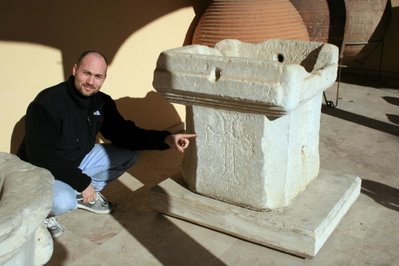
An early infant baptistry (notice the cross)

Monday, January 01, 2007

Tarsus and Lystra

Today we left Adana and made our way to Tarsus and Lystra. Tarsus was the boyhood home of Paul and was "no ordinary city" (Acts 21:39). We're pretty confident this was Paul's hometown because Jesus Himself said it was in Acts 9:11. This city has also hosted other significant figures in history such as Marc Antony, Cleopatra, Xerxes, Darius, and Alexander the Great.


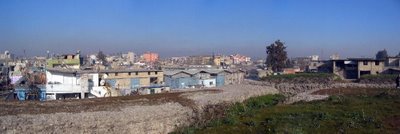
A view of modern day Tarsus.


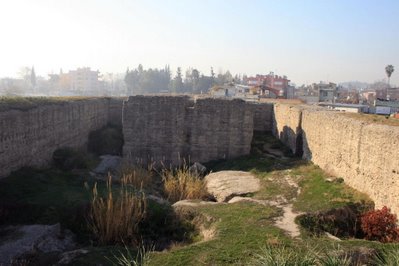
Perhaps the most impressive of the remains of Tarsus. This is all that is left of the ancient main road that ran through the center of town. The ruins just to the side are the remains of a marketplace. Paul would have traveled through here almost daily.


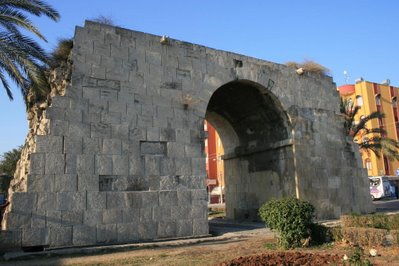
This is the old entrance to the city. It is now called the "Gate of Cleopatra" and legend says she passed through this gate on her way to marry Marc Antony.


Archeologists are unsure of what this giant ancient structure dating to 200AD is but they believe it may be some sort of cult temple. The archeologist traveling with our group said there is nothing else from the ancient world of this magnatude in all of Turkey.


The Kidnis river is where Alexander the Great bathed and caught an illness that almost killed him in 333 BC. It is also the river that Paul would have played in as a child.

After leaving Tarsus we traveled through the Cilician Gates which aren't actual gates but a very narrow passage through the Tarsus mountains. Paul would have traveled through here with Silas on his 2nd and 3rd missionary journeys. Many other famous historical figures would have traveled through here as well.

Unfortunately I don't have a picture to post but I will say this; I was completely amazed at how difficult the travel was to get from Tarsus to Iconium. The mountain passage was extremely rugged and difficult followed by foothills and plains of equally tough terrain. Realizing that what took us 3 hours to drive through probably took a week's worth of difficult travel made me really begin to appreciate the hard work and dedication that Paul was willing to endure to spread the message of Jesus.

After driving several hours we passed Iconium (where we are staying tonight and visiting tomorrow) and went to visit Lystra. I was very excited about visiting Lystra because it's one of my favorite places Paul visited in all his journeys.

Paul visited Lystra on both his 1st and 2nd journeys and here are the main events that took place in this tiny little town:

1. Paul miracously heals a man lame from birth.

2. Paul and Barnabas are worshiped as they are thought to be Zeus and Hermes in the flesh.

3. Paul is stoned to death and raised from the dead.

4. Paul recruits and circumcises Timothy who becomes his protege and the receipient of two personal letters.

5. The church here is one of the intended receipients of the letter to the Galatians.


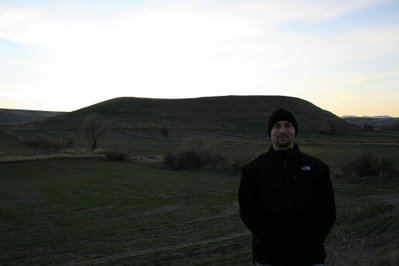
However what I didn't know is that while archeologists have found very strong proof that this is the location of Lystra, it has yet to be excavated. So when we arrived, this is what we saw:

It's not a hill but rather a tell (an archaeological site in the form of an earthern mound that accumulates from mineral buildup over time) that covers modern day Lystra.


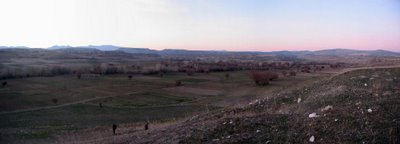
Here is the view from the top.


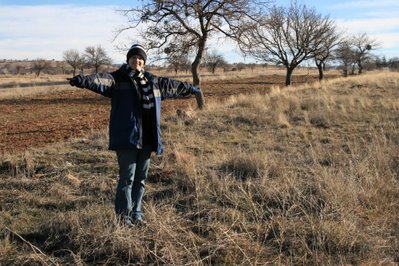
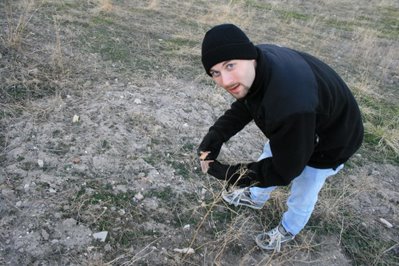
Me playing archeologist. I'm actually holding several pottery shards I found. I don't know how old they are but they looked very old.

Sunday, December 31, 2006

Antioch on the Orontes and Seleucia

We started out day in Antioch on the Orontes (also known as Syrian Antioch). What an incredible experience to be in this city, so rich in Christian history. Antioch was the hub of Paul's missionary activities, his journeys usually started and ended here, his commissioning church was here, he confronted Peter here (Galatians 2), he took rest here between trips, the letter with the result of the Jerusalem council was addressed to the people here, many believe Matthew wrote his gospel from here, Paul likely wrote his letter to the Galatians from here, and it was the first place the word "Christian" was ever used.

P.S. You'll be glad to know our bags finally arrived this morning.


The city of Antioch looks much different today than it did in Paul's time.


The Orontes River flows through the center of Antioch as it did in Paul's day.


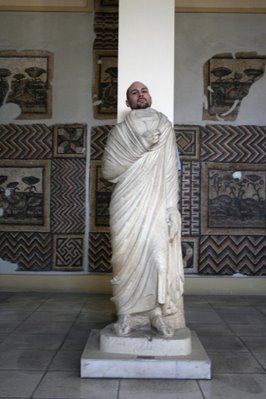
We spent some time studying artifacts at the museum in Antioch.


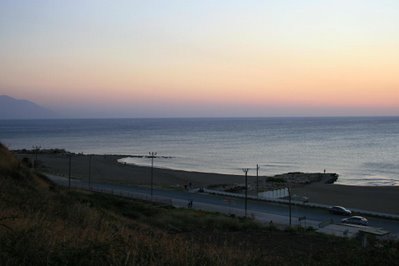
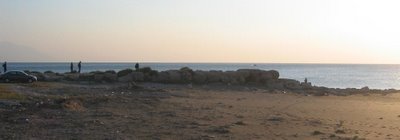
We then made our way about 25 miles Southwest to Seleucia. Seleucia is the port city where Paul and Barnabas set sail for Cyprus on their first missionary journey.

The two inlets into the sea are all that remains of this ancient seaport.


As we walked along the ancient seaport I looked out to sea thinking about Paul and Barnabas doing the very same thing some 2000 years ago, wondering what God had in store for them on their journey.


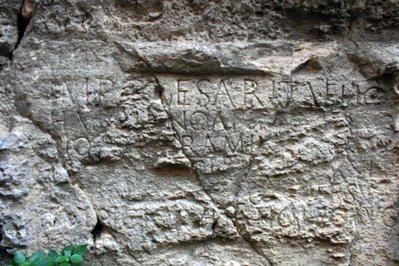
This is the inscription of the Emperor when Titus' tunnel was completed in 72 AD.

Saturday, December 30, 2006

Greetings From Istanbul!!!

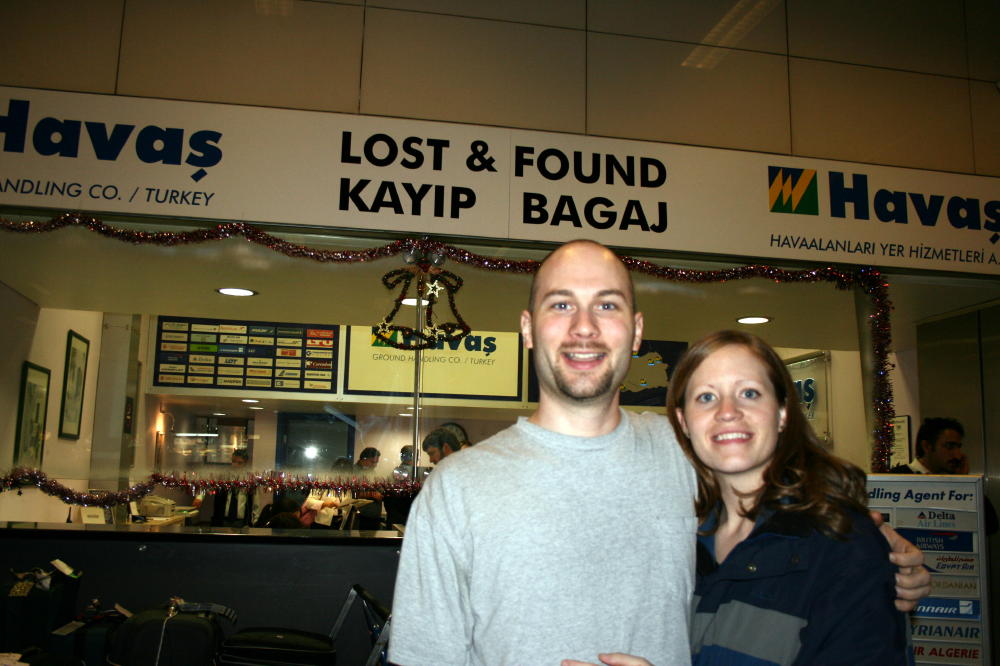
We finally made it here… Well kind of. Emily and I and all our classmates made it but our bags didn’t. Last I heard all of our bags (yes all 40 from our entire group) were somewhere between London and Adana, Turkey. Although we’ve been wearing the same clothes now for over 48 hours, our spirits are sky high as we prepare to study firsthand the journeys of the Apostle Paul.


We spent the today (the 30th) in Istanbul. It was freezing cold but we saw several amazing sites in the only city in the world that spans two continents.

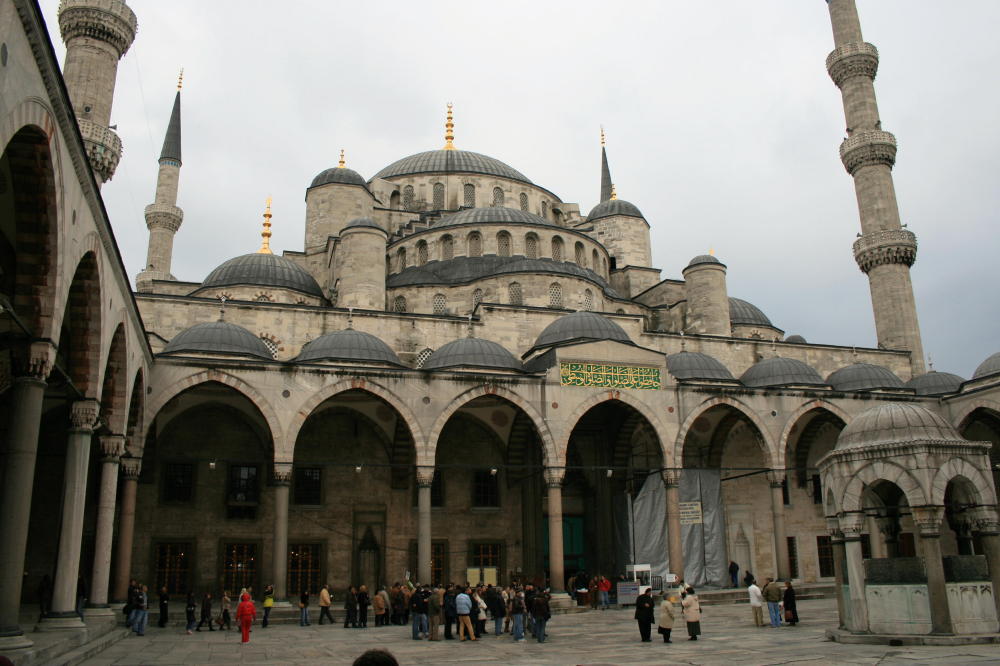
The Blue Mosque (named for the tiles on the inside and not the outward appearance) was a bit of a let down. I had heard so much about it but when we were actually there it seemed to be more for tourists than a Muslim place of worship. Interestingly enough myself and a fellow student, Onsi, both felt a significant lack of a feeling of demonic oppression than we had felt at other mosques before.


We then visited the Hagia Sophia (the center of the Eastern Church for a thousand years). It was sad to see how much destruction of the church had taken place when it was converted into a Mosque in 1432 (it is now a museum). However the history of this building is amazing. Of the 7 Ecumenical councils, numbers 5 and 6 took place here. It was also the first basilica to have a single domed roof.


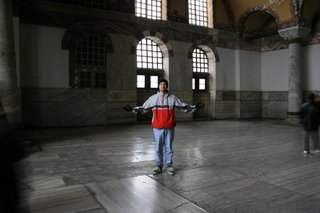
The Ecumenical Councils took place right here

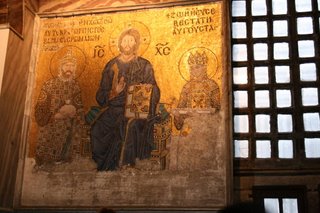
The mosaics on the walls (many of which were covered up by plaster when the basilica was converted to a mosque) are absolutely stunning. This picture is made up of thousands of single colored pieces of glass.


We caught a late flight and headed 350 miles south to Adana, the 4th largest city in Turkey. Tomorrow we’ll see Antioch (Paul’s base of operations and the first place the word “Christian” was used) and Seleucia (the port Paul and Barnabas sailed to Cyprus on their first journey).

Thursday, December 07, 2006

What is Chanukah?

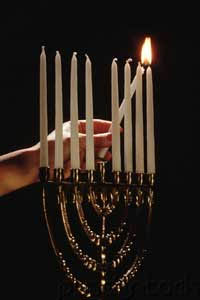
The celebration of the Jewish festival of Chanukah (sometimes written as Hanukkah) remains a mystery to many Bible believers. It begins this year on Friday, December 15, at sundown. Its beginning is on the Jewish Shabat this year. The date is Kislev 25 on the Jewish calendar. It continues for eight days in commemorating the tradition that the oil for the light in the Second Temple (the one built in the time of Haggai and Zechariah – completed in 516 BCE) was sustained so that the Maccabees could finished [sic] their victory over Antiochus Epiphanes and the Seleucid domination of the Holy Land. The Temple was then cleansed from its pagan defilement.

Jewish People give gifts to one another on each day of this celebration, usually beginning with a small item that does not cost a great deal. Each day the gifts increase in value.

The prominent symbol of the celebration of Chanukah is a Menorah with nine branches instead of the seven used for the Temple Menorah (lampstand). The four branches on each side of a central candle (total of eight) represent the eight days that tradition says the light of the Temple was sustained miraculously by the oil. The arguments among Jewish scholars over the significance of the central candle continue to this day, but the prevalent view of rabbinical tradition is that the central candle refers to the light of the Messiah Himself!

That seems to match what we read in the Gospel of John. In John 10:22 we read that our Lord Yeshua was present at this “feast of dedication” in Jerusalem, and it was “winter.” In John 7:2 we know that the events of that chapter were clearly at the time of the “feast of Tabernacles” which comes in the fall in the month of Tishrei (Tishrei 15-22), which is the seventh month o the Jewish calendar. The following month is Cheshvan, and immediately following is the month of Kislev when Chanukah is celebrated. So, the period of time between the events of John 7 and John 10 is approximately 63 days. Some Biblical scholars believe that there is a slight “time gap” between John 7 and John 8, the story of the women taken in adultery. In John 8:12 Yeshua said: “I am the LIGHT of the world: he that followeth Me shall not walk in darkness, but shall have the light of life.” Similar words were spoken by our Lord in John 12:35-36, 46.

In John 8:20 we learn that the words of our Lord Yeshua about being the “LIGHT of the world” were spoken in the “treasury” as He “taught in the temple.” If the occasion was connected with the celebration of Chanukah, then we know that giant candelabras were lit in that area of the Temple during the festival; and all the way from Amman, Jordan, it looked like Jerusalem was on fire (remark in the writings of Flavius Josephus)! It appears from the closing words of John 8, that Yeshua escaped an attempt to stone Him. John 9 is the story of the man born blind who was healed by our Lord. It is possible that the words of John 10 about the Shepherd and His sheep should be connected with the story of John 9. In any case, by John 10:22 we are now at the “feast of dedication (Chanukah).”

This celebration is known as the “festival of lights,” and many scholars believe that all the “lights” associated with the celebration of Christmas actually have their roots in the Jewish festival of Chanukah.

Reprinted from Hope for Today Newletter Volume XI Number 12 - “What is Chanukah” by David Hocking

Sunday, December 03, 2006

The Bondage Breaker by Neil T. Anderson

After my experience in Eastern Europe last September I realized I didn't know as much about spiritual warfare as I should. So I picked up several books dealing with the topic. I just finished one of them entitled The Bondage Breaker by Neil T. Anderson.

Anderson divides the book into three parts. The first part examines a Christian's identity in Christ while the second part looks deeper into Satan's tactics to defeat us. I thought these two sections were good but he could have condensed it considerably.

However it's the third section, "Steps to Freedom" that I found most helpful. Based on the premise that "...people are not in bondage because of past traumas - they are in bondage to the lies they believed as a result of past traumas" Anderson puts forth a seven step process to teach Christians God's truths and help them overcome the enemy.

Don't be fooled, Anderson clearly rejects that there is anything magical about the words or process used. Helping Christians to discern and reject lies about them from Satan and learning to see themselves as God sees them, will set them free from bondage. Anderson then gives a step by step process to help Christians discover Satan's footholds in their lives and how they can remove these footholds through prayer and confession.

For the most part I think this book is fantastic and I recommend every Christian buy it. I also very highly recommend every Christian to go on a half-day personal retreat to complete chapter 13's Steps to Freedom in Christ.

You can buy the book by clicking here The Bondage Breaker®

Sunday, October 22, 2006

The Guardian

Due to the busyness of my schedule I don’t often get a chance to go to the movies and when I do, I usually go to one that doesn’t require much heavy thinking, as a way to “escape” if you will. This blog is not a source for movie reviews, however it does focus on contemporary apologetics and after watching this movie, it got me thinking about something that I wanted to share with you.

I went and saw “The Guardian” a few days ago. The Guardian (staring Kevin Costner and Ashton Kutcher) is a movie about the United States Coast Guard rescue swimmers. Although the film takes some creative license, these men and women have arguable the most difficult job in the world. When you are far out to sea in the middle of a dangerous storm and your boat is sinking, these men and women risk their own lives, as their motto so clearly states, “So Others May Live.”

So others may live. What a noble concept; sacrificially ending one’s own existence so that someone else can extend theirs. It sounds nice but is it accurate?

Perhaps being accurate isn't the right question. Perhaps a better question would be to ask “Is believing in the nobility of laying down one’s life so that another can live, consistent with a person’s worldview?”

Let me try to unpack that a bit:

As a follower of Jesus Christ, I believe that human beings are valuable because they are made in the image of God (See Genesis 1:26). Sacrificing one’s own existence for another is noble and virtuous. John 15:13 says “Greater love has no one than this, that he lay down his life for his friends.”

However not everyone can say that. There are many different worldviews and religions that teach many different things. Depending on your specific worldview/religious beliefs will determine whether you truly believe saving another’s life at great personal risk is noble, foolish, or moot.

Consider the following:

Evolution/Naturalism – An evolutionist (or naturalist) believes that mankind exists as the result of pure accident. That protons, neutrons and atoms just happened to combine the right way to create life and over billions of years humans are the latest in a series of life forms. But if you believe in evolution you can’t ascribe worth to a human any more than you can a rock. Neither has more value than the other. Jumping from a helicopter into 20 foot seas to save a person is no more noble than trying to save a piece of granite.

Furthermore, risking your life to save another is contradictory to the “survival of the fittest” philosophy embraced by Charles Darwin. Darwin stated that mankind’s chief end is to survive in order to pass down your genes to the next generation. Those most fit to survive will pass on their genes and those least fit will die off, thereby continuing the evolutionary process. But by risking your life to save someone else, you not only risk removing yourself from the gene pool, but enabling one “less fit” to continue to pass their genes on. Rather than being a righteous action, the rescue swimmer is simply demonstrating his/her own “less fit” status for passing on genes than that of the victim. Saving another’s life at risk to your own is a complete contradiction of Darwin’s philosophy. (To further develop this concept read my post on “What is a Right?” by Clicking Here).

Hinduism – A Hindu would have a hard time finding the nobility in sacrificing your life because the victim essentially had it coming to them. Hindu’s would argue that the victim’s potential drowning must have been bad karma from his/her previous life. They would say that hopefully in the next life the victim would do better in breaking free from the cycle of reincarnation.

Buddhism – A Buddhist would find no nobility or justification in self-sacrifice because there really isn’t a problem at all. The victim isn’t really drowning and you’re not really there to save them because you, the victim, and the raging seas around you don’t really exist in the first place. You just appear to be a person at a specific point in the cycle towards reaching enlightenment. It's simply an illusion.

Atheism – An atheist would have to find the rescue swimmer foolish to sacrifice his/her life. Since atheists don’t believe in God they can’t justify or attribute any value to human beings, and since they don’t believe in an afterlife, there would be no “reward” in heaven (or paradise etc.) for the foolish actions of the rescue swimmer. Nothing to look forward to but complete nothingness as your body rots away.

When I look at these different worldviews in this situation I find myself struggling with what I know to be true in reality. That deep down in my heart, saving another's life is a good thing. While sitting in that theatre I don’t know how many Buddhists, Hindu’s, Atheists, or Naturalists there were, but I presume there had to be some. However I couldn’t find a single person in that theatre that seemed to be feeling anything less than genuine admiration for the rescue swimmers of the US Coast Guard. Nobody mumbled about “foolish acts for no good reason.” Nobody yelled out that “Nothing that film depicts really existed so what’s the big deal?” Nobody sighed outloud “He must have deserved to drown due to Karma. I’m sure he’ll do better in the next life.”

Not one single person. In actuality it was quite the opposite. I personally believe that’s because deep down in all of our hearts we know that sacrificing our life for another is among the most noble, generous, loving things we can do.

We can make up all kinds of excuses about where we came from, whether we have a second shot at life, or whether we even exist at all, but when it comes time to put our beliefs to the test, all these beliefs will fail, most without even realizing it, because God didn’t create us that way.

God loves mankind so much that he sacrificed his Son for us, and being made in his image and following his example, it is the supreme act of love to do it for another and for that reason alone, do we find self-sacrifice for the benefit of others to be among the most noblest of all deeds.
Friday, October 13, 2006

What Does A True Christian Look Like?

"...And even in the painful aftermath of the shootings, the Amish continued their witness to the love of Christ, reaching out to Roberts’s family, attending Roberts’s funeral, comforting his wife and children, and providing for them through a fund established for Roberts’s victims and their families. One victim’s family even invited the Roberts to their daughter’s funeral. In the most dramatic way, they forgave Roberts."
-- BreakPoint Commentary - 10-11-06 - Charles Colson

By now almost all of us have heard about the recent tradgedy in Nickel Mines, Pennsylvania where 5 young Amish girls were executed by a gunman (Charles Roberts) in their schoolhouse. But while many of us try to sort through our own feelings there has been little coverage, or at least little understanding, of how and why the Amish are handling it the way they are.

Quite simply, the Amish are taking the words of Jesus literally.

"You have heard that it was said, 'You shall love your neighbor, and hate your enemy. But I say to you, love your enemies, and pray for those who persecute you."
-- Matthew 5:43-44

Perhaps Katie Weaver, an Amish woman that traveled from Michigan to support those in Pennsylvania, said it best, "We can tell people about Christ and actually show you in our walk that we forgive, not just say it."

But how can someone forgive another when something so bad has happened? That's a great question. Is it a clear understanding that our own sin is just as bad in God's eyes? Is it being able to tap into some sort of supernatural strength from God? Is it both of these or even more? I wish I had a clear cut answer. Until I do I take comfort in knowing that not even Jesus' 12 closest friends figured it out right away.

[Jesus speaking] "And if he sins against you seven times a day, and returns to you seven times, saying, 'I repent,' forgive him." And the apostles said to the Lord, "Increase our faith!"
-- Luke 17:4-5


Read the entire BreakPoint commentary

Tuesday, October 10, 2006

Lord's Prayer Sung in Ukrainian

The following video... actually it's audio recorded in a video format (long story), was recorded during a worship service at a new church plant among "teens and twenties", (many ostracized by the "official church" solely for their age) in central Ukraine.

I always feel like I'm getting a taste of what heaven will be like when I hear songs sung to God in foreign languages.

CLICK ON THE PICTURE TO PLAY THE VIDEO

Monday, October 02, 2006

Demonization and the Power of Jesus

I had an incredible experience last week. One that's never happened to me before. Even now I am trying to sort through my thoughts and feelings about it. Rather than try to put everything down here and attempt to have it make sense, I'll redirect you to the blog of someone else who was there with me and is much more articulate than I am.

CLICK HERE

or go to

http://www.undertheiceberg.com/2006/10/02/demonization-and-the-power-of-jesus/

Thursday, September 28, 2006

Ukraine and Romania

I'm just finishing up a 14 day trip through 4 countries that has found me in 8 different hotels with 5 different roommates. As you can imagine I'm pretty tired but I wanted to post a few pictures of just a few things I've learned:


The Russian Orthodox Church traces its origins to Ukraine.


The Orthodox Church seems to put more emphasis on works than what Jesus did on the cross.


Although beautiful to look at, the Orthodox church in Ukraine and Romania has found itself completley irrelevant and unable to reach the people.


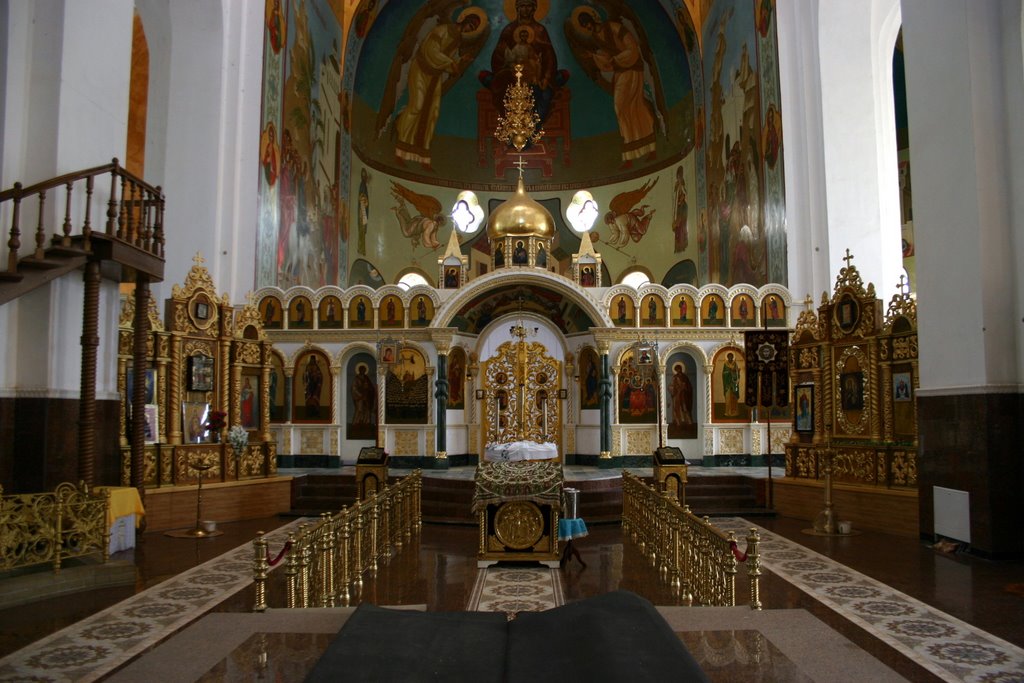
This is the inside of a Ukrainian Orthodox church.


Life in Kiev, the capital of Ukraine.


Anyone hungry for some Ukrainian food?


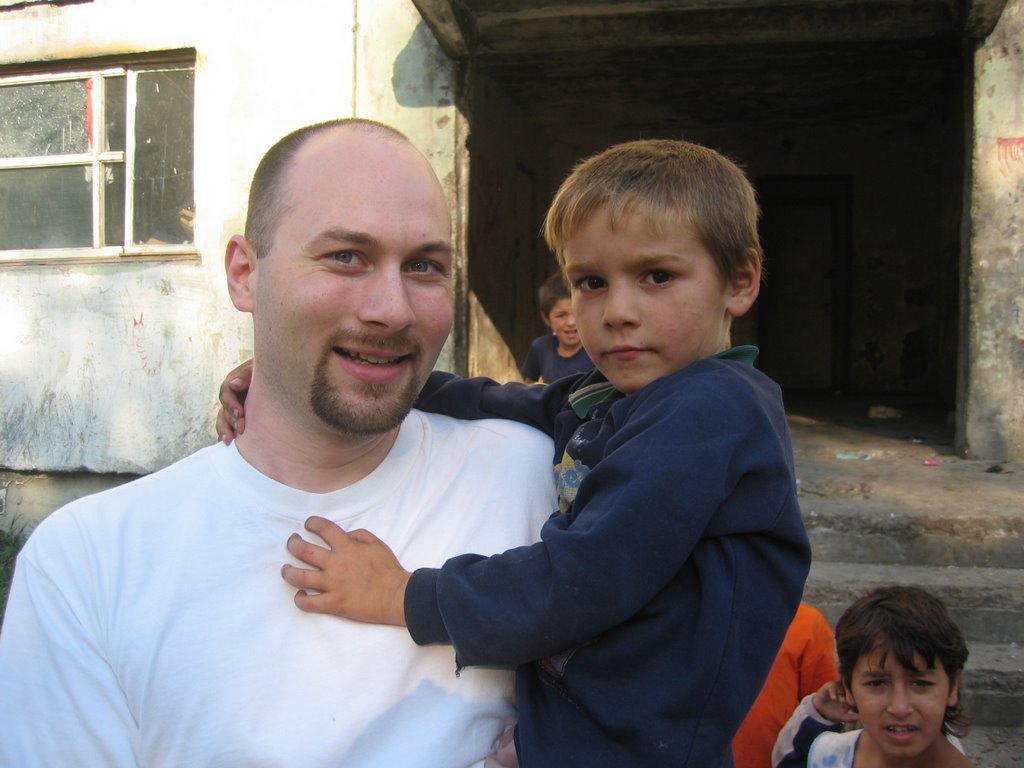
Even though it's located less than 100 yards from their "home" the lead bishop of the Orthodox Church in Romania has made it clear that he wants nothing to do with these children.


Who will share the love of Jesus with these children?


Marian and me in Sept. 2005


Marian and me in Sept. 2006

On my trip to Romania in 2005 I quickly bonded with a young boy named Marian. I believe he is probably 5 or 6 years old, but life in these wretched conditions makes one's age difficult to determine. Having no running water, electricity, food, or even a toilet, can take it's toll. It was such a blessing to be able to find my friend Marian again on my return visit. I didn't think I'd be able to find him among the hundreds of other children and if I did I wasn't sure how he'd be. I was thrilled to see how much healthier he looked this year. He still had that same warm smile that I remembered and he seems to be overcoming impossible odds.

Sunday, September 17, 2006

So Have You Heard The One About...?

I've got a good one for you. While giving a history lesson to around 1500 Catholic theology students the Pope, reading from a 14th century document, says:

"Show me just what Muhammad brought that was new, and there you will find things only evil and inhuman, such as his command to spread by the sword the faith he preached."
In angry response two Muslims stormed a Catholic hospital in Somalia and shot a 70 year old nun 3 times in the back killing her and her body guard. Then we find out:

"Hardline cleric Sheikh Abubakar Hassan Malin [in Somalia] on Friday told worshippers at his mosque to hunt down and kill whoever offended the Prophet Mohammed. "
Okay so let me make sure I have this right; These Muslims are angry about the Pope reading from a document more than 600 years old, which describes their religion evil and inhuman and to express this anger they go out and murder innocent people?

Am I the only one who sees the irony in this?


Click Here or Click Here for the articles

Saturday, September 02, 2006

Has Billy Graham Become an Inclusivist?

I know I have a hard time imagining that as well but after having read a featured article in the August 14th edition of Newsweek magazine I was definitely surprised to learn of the evolution of some of his beliefs.

The article was written by the managing editor of Newsweek, Jon Meacham. If that name rings a bell it may be because I wrote a critique a few years ago of his article about the birth of Christ. [To read those critiques Click Here and Click Here].

Here are some of the “highlights” (or lowlights) of Meachams interview with the most well-known evangelist of all time:

[In reference to the Bible] …"I'm not a literalist in the sense that every single jot and tittle is from the Lord," Graham says. "This is a little difference in my thinking through the years." He has, then, moved from seeing every word of Scripture as literally accurate to believing that parts of the Bible are figurative…

I’d be interested to know how he reconciles that with Second Timothy 3:16 which states “All Scripture is God-breathed and is useful for teaching, rebuking, correcting and training in righteousness” [emphasis mine].

[At one point in the article Meacham inserts a section from an interview with Franklin Graham, Billy’s son.] In perhaps his most celebrated remark, Franklin has referred to Islam as "a very evil and wicked religion," and declines to back down. "After 9/11, there were a lot of things being said about how the God of Islam and the God of the Christian faith were one and the same, but that's simply not true ... ," Franklin told NEWSWEEK. "The God that I worship does not require me to kill other people. The God that I worship tells me I am to love my enemy, to give him food when he's hungry and water when he's thirsty."…. Asked about his son's use of the phrase "evil and wicked" in reference to Islam, Graham says: "I would not say Islam is wicked and evil ... I have a lot of friends who are Islamic. There are many wonderful people among them. I have a great love for them. I have spoken at Islamic meetings, in Nigeria and in different parts of the world."

Refusing to condemn the worship of a false God? I could be way wrong, but it seems to me anything that worships and praises a false God would be, by definition, evil and wicked (remember the first commandment?). I guess I just can’t see how God would look at that sort of behavior and be pleased with it.

Finally, here is the biggest ouch moment for me. Billy Graham, the man who has preached of Salvation through Jesus alone, all over the entire world for the past 60 years goes on to say:

A unifying theme of Graham's new thinking is humility. He is sure and certain of his faith in Jesus as the way to salvation. When asked whether he believes heaven will be closed to good Jews, Muslims, Buddhists, Hindus or secular people, though, Graham says: "Those are decisions only the Lord will make. It would be foolish for me to speculate on who will be there and who won't ... I don't want to speculate about all that. I believe the love of God is absolute. He said he gave his son for the whole world, and I think he loves everybody regardless of what label they have." Such an ecumenical spirit may upset some Christian hard-liners, but in Graham's view, only God knows who is going to be saved: "As an evangelist for more than six decades, Mr. Graham has faithfully proclaimed the Bible's Gospel message that Jesus is the only way to Heaven," says Graham spokesman A. Larry Ross. "However, salvation is the work of Almighty God, and only he knows what is in each human heart."

Wow! I know, not what I was expecting to hear either. Don’t get me wrong, I completely agree that only God knows the heart, God loves everyone, and that God alone is the gatekeeper of heaven’s doors. But I also believe John 14:6 that says “Jesus answered, "I am the way and the truth and the life. No one comes to the Father except through me. It seems clear to me that belief in Jesus for the forgiveness of one’s sins is a foundational requirement. I can’t understand where he see’s a loophole for those religions that deny Christ. Then again, the article is written by a strong opponent of historical Christianity and it’s quite possible that Billy’s words have been twisted against him to support Meacham’s personal agenda.

If you’d like to read the article, in its entirety for yourself, go to http://www.msnbc.msn.com/id/14204483/. I'd be very interested to read any of your comments whether you agree or disagree with me.

Saturday, July 15, 2006

Outnumbered and Surrounded by Enemies

I receive a free monthly magazine from The Voice of the Martyrs. An organization that works with Christians persecuted for their faith, around the world. In an ironic twist, it seems more often than not, that these persecuted Christians are doing more to share the love of Jesus with non-believers, than those of us who live in free countries.

The following is taken from an article from a recent edition of the magazine. (It should be noted that in Egypt it is illegal to convert to Christianity).

One Egyptian Christian approached two imams of a large mosque. He told them “I want to know about the truth and talk about Islam. The imams were delighted and told him to come to the mosque the following day at one o’clock.

The next day when the Christian walked in, he was surprised to see the two leaders sitting there with 10 of their students, or disciples. The Christian prayed, “Oh God, help me find a way to talk to them.” He was outnumbered and surrounded by enemies. Sitting down on the carpet with the group, he addressed the imam with the traditional term “beloved.” The imam stopped him. “You cannot call me that!” said the irritated leader, “I cannot love you as a friend.” The Christian opened his Bible to Matthew 5: “But my holy book, the Bible, commands me to love you. Jesus said we should love our enemies.

The imam’s disciples were watching this discourse with great interest. One of them turned and asked their leader, “Why can’t we be a friend to him?” Another asked, “Why does God say we must hate him, but his God tells him to love us?” The imam stood up, furious, and tried to speak, but his anger, or the hand of God, caused his voice to choke up. He put his hand on his own throat, his face turning red, then whirled around and left the room. The Muslim disciples moved closer on the rug, clustering around the Christian. They asked questions for the rest of the afternoon. They wanted to know more about this power to love your enemies. Some still meet with this bold brother.


To get your own subscription visit The Voice of the Martyrs website.

Saturday, July 08, 2006

Spiritual Accountability Questions

The following is the letter from Chuck Swindoll I mentioned in my last post. I think it lists some great questions and I plan to use it as a guide in my accountability group.

Being creatures with blind spots and tendencies toward rationalization, we must also be in close touch with a few trustworthy individuals with whom we meet on a regular basis. Knowing that such an encounter is going to happen helps us hold the line morally and ethically. I know of nothing more effective for maintaining a pure heart and keeping one’s life balanced and on target than being a part of an accountability group. It is amazing what such a group can provide to help us hold our passions on check!

Recently, I was encouraged to hear about a minister who meets once a week with a small group of men. They are committed to one another’s purity. They pray with and for each other. They talk openly and honestly about their struggles, weaknesses, temptations, and trials. In addition to these general things they look one another in the eye and answer no less than 8 specific questions:

1. Have you been with a woman (or man) this week in such a way that was inappropriate or could have looked to others that you were using poor judgment?

2. Have you been completely above board in your financial dealings this week?

  • Are you honoring God with your money?

  • Tithing regularly?

  • Getting out of debt?

3. Have you purposely exposed yourself to any explicit material (pornographic and/or sexually suggestive material) this week?

  • Have you held on to or fostered any impure thoughts?

4. Have you spent daily time in prayer and in God’s Word this week?

  • Where is the Bible you are reading?

  • When do you have your time with God?

  • Do you keep a prayer list?

5. Have you fulfilled the mandate of your calling? In other words, have you fulfilled the responsibilities God has called you to as a member of His body and witness to the world?

  • How is your service for Christ going?

  • Have you done your part of fulfilling the Great Commission by sharing how to become a Christian with someone or discipling other believers?

6. Have you taken time off to be with your family this week?

  • What have you done to show your wife she is cherished?

  • What have you done to show your kids they are special and unconditionally loved?

7. Is there anyone you need to ask for forgiveness from or anyone to forgive?

8. Have you just lied to us?

Authenticity and Accountability

The past month has found me right in the midst of a move to a new home (hence the reason I haven’t posted in so long). As is inevitable in any move I began looking through old files and I came across a letter from Chuck Swindoll. As I read it I began to think about the hundreds of pastors and church leaders I’ve worked with from all over the world and two of the biggest obstacles to their work.

One of the biggest chasms between many pastors and their congregants is a lack of authenticity. So often it seems that a pastor will preach from the pulpit about how everyone else should live their life, but then never takes the time to explain the struggles he is facing in his own life. This often causes the church-goer to believe there is something wrong with them if they are struggling with something that seems to affect no one else. Over time this syndrome will cause many to view the pastor as having a “holier than thou” status and eventually they will walk away from the church disgruntled.

The other half of this deadly combination is a lack of accountability. Quickly eroding the trust and credibility of the pastor and just a small step away from becoming full blown hypocrisy, lack of accountability will cause the most moral of men to eventually fall. One of the most destructive things to happen to a church is moral failure by a pastor. Perhaps the single best method for preventing moral failure is accountability. (Anyone remember Proverbs 27:17?) Far too often a pastor is so busy tending to people that he fails to forge accountability relationships with others, however these relationships are absolutely vital if one hopes to have any defense against the giant bulls-eye painted on him by the Devil.

Becoming authentic and honest from the pulpit will require a tremendous amount of courage (at first) and the solicitation of feedback from trusted peers, but it can be done and it will become easier over time. Gathering a friend, or small group of friends, together to help hold each other accountable is much more difficult. It may even seem terrifying at first. Revealing your deep innermost struggles and temptations to another person may leave you feeling vulnerable and awkward at first. But with the right person (or group of people) and an atmosphere of trust and confidence, one can establish a line of protection against moral failure that will be exponentially more difficult for the Devil to penetrate.

Although I have written specifically about pastors, that by no means excludes any of us from needing to exhibit these characteristics in our own lives. How will those who don’t have a relationship with Jesus, come to have one if they look at our lives as inauthentic or holier than thou? How will they view me if I continually have moral failures and do little to prevent it from happening again? For me personally, authenticity and accountability are two areas I could do much better in and I plan to make an intentional effort to improve them starting now. How about you?

Thursday, June 08, 2006

Did They Really Say That? # 2

"The only men who become Gods, even the Sons of God, are those who enter into polygamy"

-- Bringham Young in Journal of Discourses 11:269 on August 19, 1866

(Bringham Young was the second prophet and former President of The Church of Jesus Christ of Latter-Day Saints [Mormon])

Sunday, May 21, 2006

King of Glory Video

This was a video played during the church service on Easter Sunday. It is a morphing of historical images of Jesus set to music. I didn't create it and I'm not sure who did (otherwise I'd give them the credit) but I think it's pretty awesome. I had to compress the file quite a bit so it may appear a bit choppy but it is still definitely worth a watch.

The video is about 5 minutes long so it may take a few minutes to download. (It may be faster just to download the video. For a PC Right Click on the picture and select "Save Target As" for a Mac, hold down the "Option" button and click on the photo.) Also, this particular video will require a Quicktime Player to watch

CLICK ON THE PICTURE TO PLAY VIDEO

Thursday, May 18, 2006

I'm Still Alive

Okay, so I just realized that last you heard I was in the barrios of Venezuela and that was over 2 weeks ago. I could see how leaving you hanging probably wasn't the best idea. Sorry about that. Things have been insane these past few weeks. Seems like nothing is going right. We've had major computer problems, health issues, both our cars died and we're looking for a new place to live. Unfortunately blogging as been put on a temporary hiatus (very temporary). I'm trying to get back to it ASAP, especially with the Da Vinci Code coming out tomorrow.

Thanks for hanging with me in the meantime.

Wednesday, April 26, 2006

Still in Venezuela....

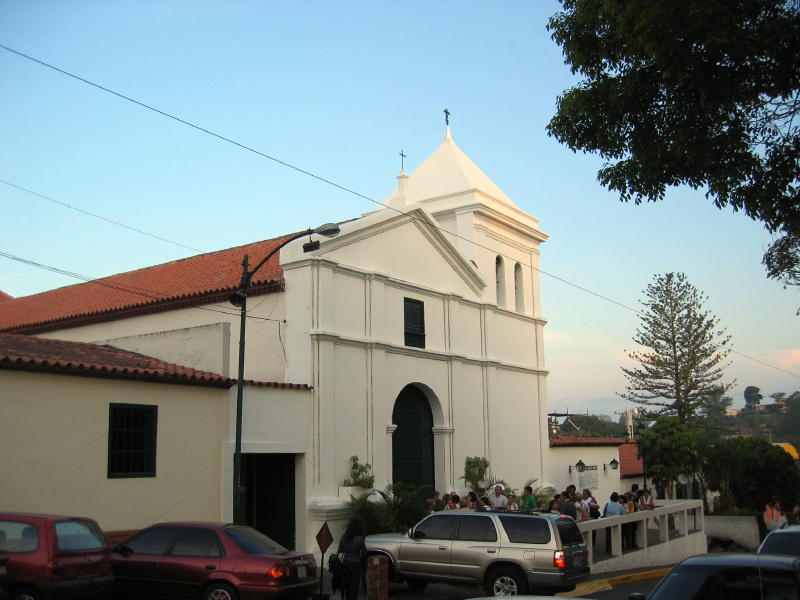
I had a quick minute and wanted to put up a few pictures. Here are just a handful taken over the past few days. They include photos of a plaza in Venezuela, a church, and me during one of my finer moments of cultural sensitivity. (Click on any photo to enlarge).