Friday, January 05, 2007

Hierapolis

Mentioned only in Colossians 4:13, the church in Hierapolis was founded by Epaphras. We known Epaphras met Paul in Ephesus but we aren’t sure how. There are three main theories that are accepted:

1. Epaphras was attending a pilgrimage to the Temple of Artemis.
2. He was a member of a civic delegation.
3. He was a merchant doing business there.

Regardless of how they met, we know that Epaphras was the primary church planter in the Lycius valley which included Hierapolis, Colossae and Laodicia (of Revelation fame).
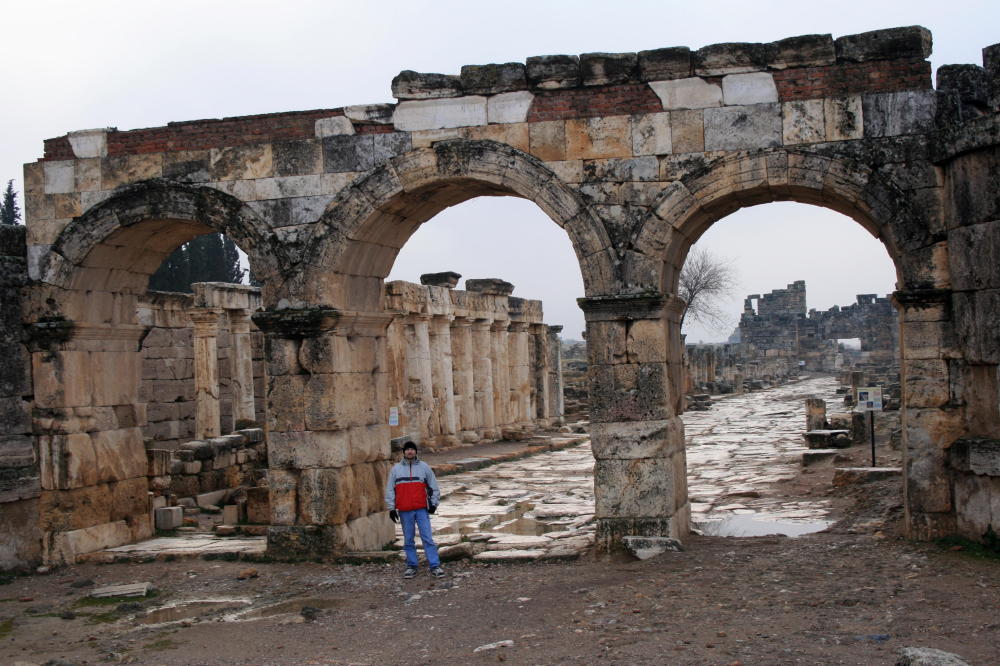


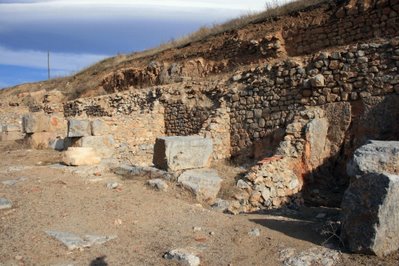
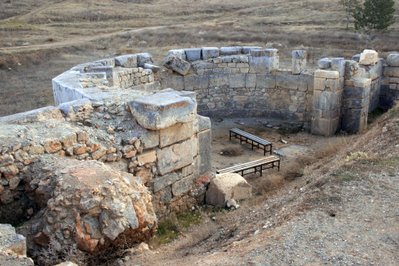
These are the main gates into the city


After Emperor Domitian died, the Senate hated him so much they demanded his name be chiseled out of every stone in the Roman Empire. (They did this with many people they didn’t like) This picture shows an example of where that happened. This helps us understand the church in Sardis would have understood and really related to Jesus’ words in Revelation 3:5 where He promises to never blot out their name from the book of life.


Can you see the Menorah at the top of the lid of this sarcophagus (ancient coffin)? We tend to think the Star of David as the standing symbol of Judaism but the Menorah was the standing symbol for over 1500 years.


Built in the 5th century AD, the Martyrion of St. Philip was erected as the final resting place of the disciple Philip. Tradition and the Apocryphal Acts of Philip state that he was executed here by upside down crucifixion.


Mandrake plants are all over Turkey. You may remember them as the fertility drug used by Leah and Rachel to barter for time with Jacob (Genesis 30). Emily and I try to steer clear of these plants.


That’s not snow but rather calcium covered thermal pools. These are the famous hot springs of Pamukkale right next to Hierapolis.

Thursday, January 04, 2007

Attalia (Modern Antakya)

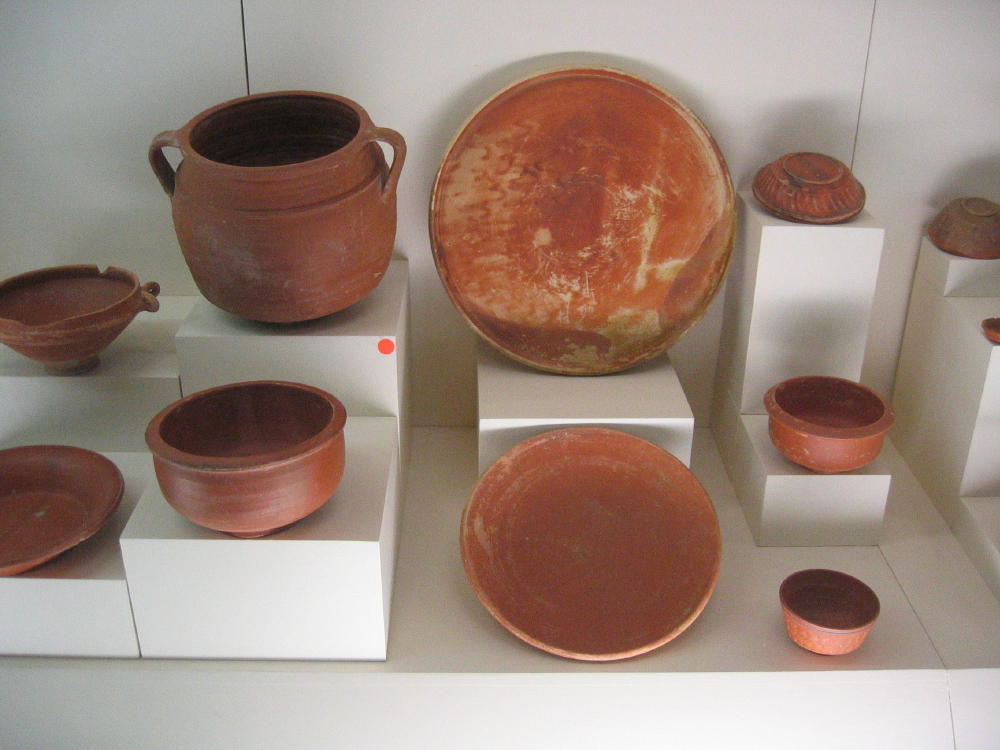
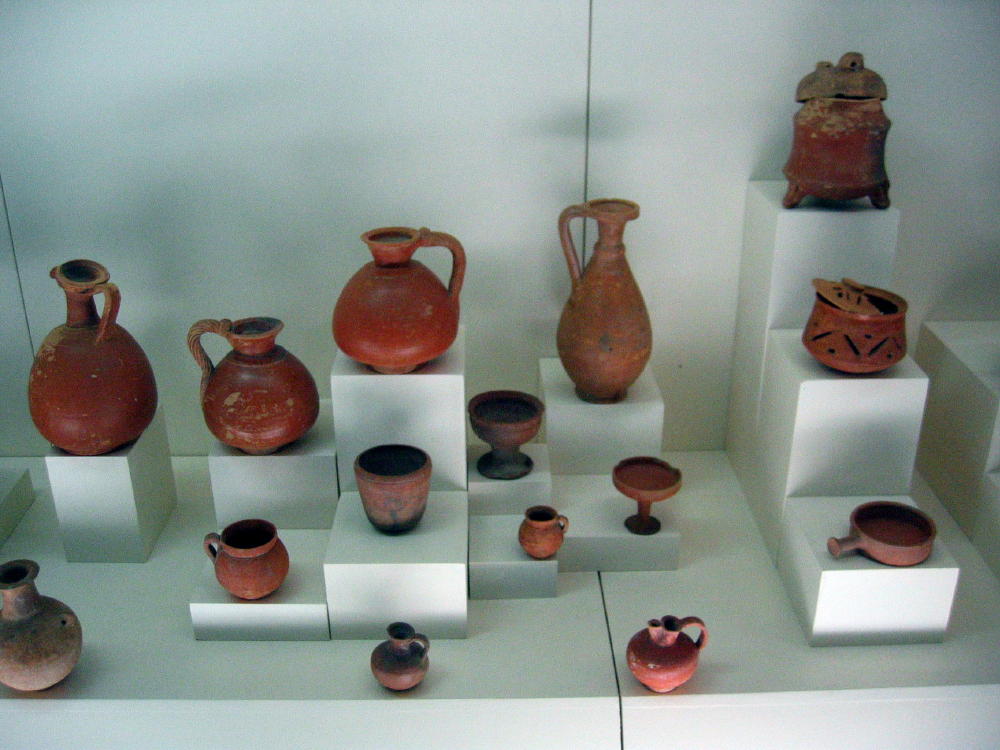
Today was mostly a travel day. It was the first morning we could sleep in (until 7:30am) and boy did we love that!!! Attalia was the port city from which Paul and Barnabas finished their first journey and sailed back to Antioch on the Orontes from. We spent the morning at a museum in Antakya that had many artificats from excavated Perga. Some of my favorites are below:

P.S. Perhaps the best news of all, I think (not positive) that I fixed the bug and you should now be able to click on photos (going forward) to enlarge them.


This pottery dates to Paul's time


More pottery from Paul's time.


Iconography dating to the 5th century AD


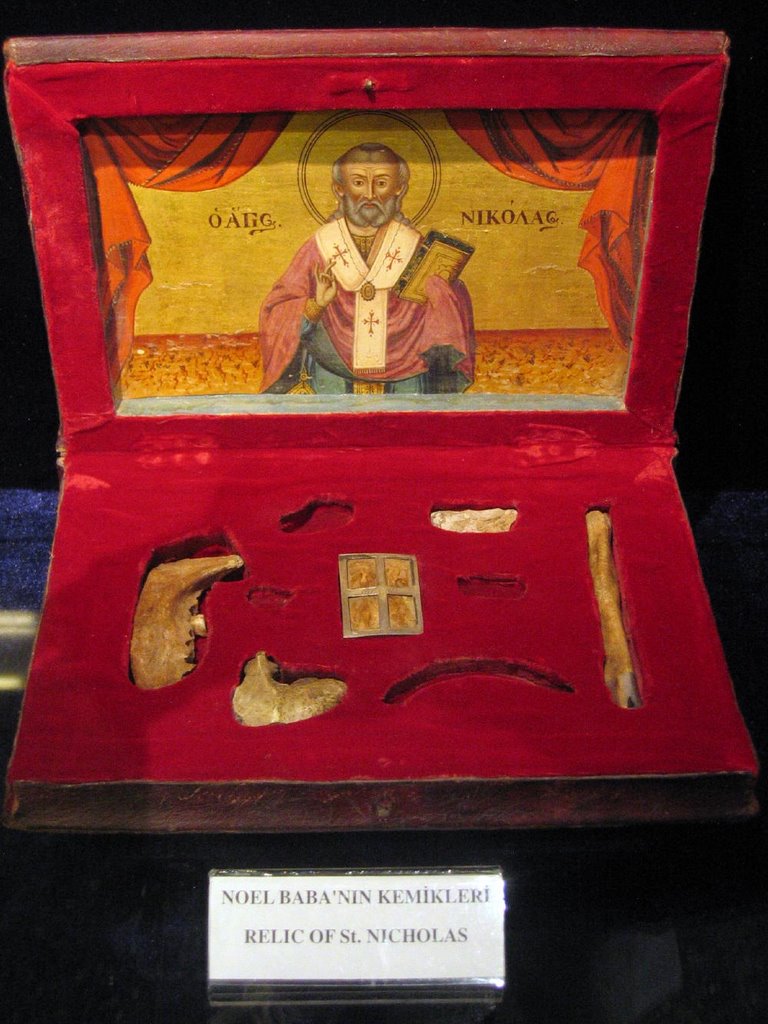
The real St. Nicholas lived in Myra, not to far from Attalia. Here are some of his, uh, "relics" (notice the jaw bone).


Our drive to Pamukkale took us through many mountains. During the drive it began to snow and at one of our rest stops we had a great snowball fight. I often forget that Paul would have had to travel through harsh conditions like this to spread the gospel.

Wednesday, January 03, 2007

Perga

“Now Paul and his companions put out to sea from Paphos and came to Perga in Pamphylia; and John left them and returned to Jerusalem.” – Acts 13:13

Paul and Barnabas arrived here on their first journey. Most of the remains date to the second half of first to second century so it’s beyond Paul’s time except for the main city gates, Paul definitely would have walked through them.


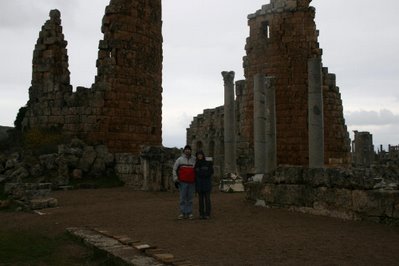
We're standing next to the gates Paul and Barnabas walked through at the entrance to the city.

Perga is where John Mark left Paul and Barnabas on the first journey. Historically scholars have come up with different theories as to the reason for his departure. These theories range from persecution to illness to homesickness. However our traveling archeologist, Dr. Mark Wilson, has a different theory. He believes that the conversion of Sergius Paulus in Cyprus was a turning point northward in a journey that should have taken them to North Africa. Dr. Wilson believes that Paul was originally headed to Alexandria based on the fact that Antioch on the Orontes was first evangelized by North African Christians and it had a heavy North African population so it would make sense that Paul’s commissioning church would send him there. However when Sergius Paulus became a Christian, things changed. Since Pisidian Antioch is the hometown of Sergius Paulus and he would have had major connections there. (This also helps explain why Paul and Barnabas didn’t evangelize in Perga during their first trip through here like they did in other cities but rather they went straight through to Pisidian Antioch). Dr. Wilson believes that John Mark may have left Paul and Barnabas in anger because he wanted to go to North Africa and not Pisidian Antioch. (This would also correlate with church history stating that John Mark later went on to evangelize and was subsequently martyred in Alexandria). While there’s no way to be sure either way, I think it makes for an interesting theory.

Although many ruins are post-Paul (just barely) it is clearly a very social culture. I can easily picture Paul discussing theology and evangelizing in a public bathhouse. The agora (marketplace) is such an integral part of the city, there is no other conclusion to make but that Paul was a street evangelist.


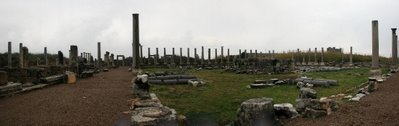
The agora at Perga.


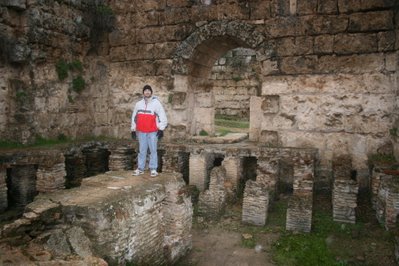
Remains of a bathhouse.


Looking at everything and picturing it complete with roofs, covered in marble, etc, I can see how beautiful these cities were. We have nothing like them in today’s world. It’s definitely our loss.


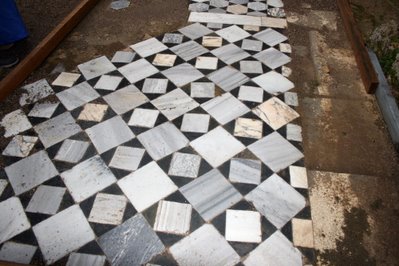
This is the floor of the bathhouse. The entire city was covered in various marble patterns.

Side and Aspendos

We stopped by three sites today. The first two were Side (pronounced "See - Day") and Aspendos. Although not directly mentioned in the Bible, these two sites have much to offer in the way of ancient ruins of Paul's day.

Side, an ancient major seaport, is a place Paul likely visited at some time. If he didn't stay here, he most likely saw it from a distance during his sail to Rome.


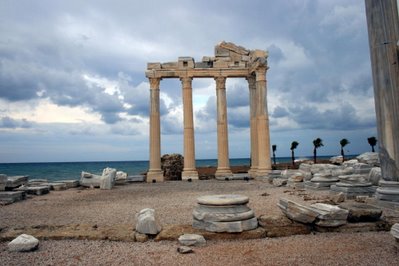
The beautiful ancient seaport of Side on the Mediterranean.
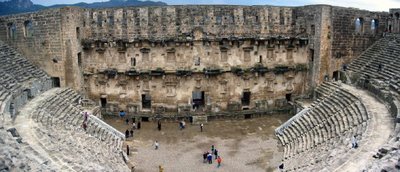

After spending time in Side we traveled a few dozen miles to Aspendos. Aspendos has the best preserved theatre in all of Asia Minor. Built under Marcus Aurelius between 161 - 180 AD, this theatre is so well preserved that it is still in use today. Emily, myself and some of my classmates performed a song here to test the acoustics. They were amazing.


Here's the view from the top of the theatre.
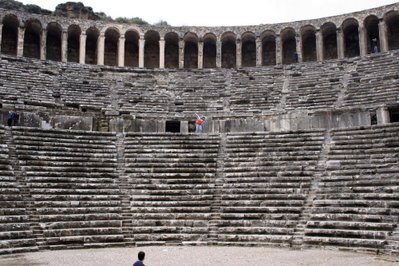
Here is the view from the stage. I'm the red dot in the center.

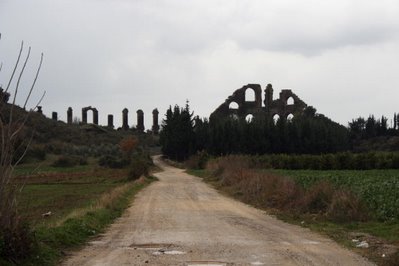
The remains of the Roman aqueduct are amazing.

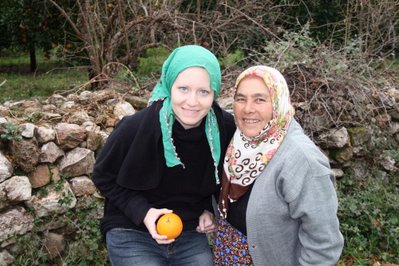
Here's Emily being conned, er... acting like a local.
Tuesday, January 02, 2007

Reading Acts 13 in Pisidian Antioch

The highlight of the day was a reading of Paul’s sermon in Acts 13. There we were, standing amongst the ruins of the great city; listening to the very words Paul spoke to the citizens there 2000 years ago. Very powerful.

Here’s the video.


Pisidian Antioch

After several hours of driving (I can't believe Paul walked all this way), we finally arrived. We drove through the city to the ruins of ancient Pisidian Antioch.


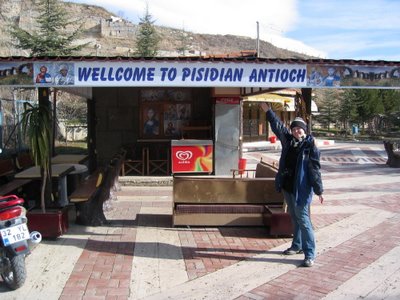
Welcome to Pisidian Antioch


This is the main road in ancient Pisidian Antioch


I'm walking in Paul's footsteps


These are the remains of shops at the main entrance to the city. Kind of like the ancient version of a mall.


These are the ruins of Temple to Ceasar Augustus.


This is all that remains of a Basilica from the 4th century AD. It was known as the seat of Optimus, the Archbishop of the province of Pisidia who represented Antioch at the council of Constantinople in 381 AD. Many people believe that the synagogue Paul spoke at in Acts 13 is buried beneath the Basilica.

Iconium

Although we spent the night in Iconium (now called Konya) there wasn’t much to see so we headed on towards Pisidian Antioch. I was amazed at the number of mosques in this city. There are hundreds of them. I later found out that Konya has the most number of mosques in all of Turkey.

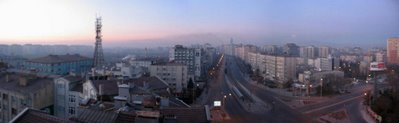
Modern day Iconium


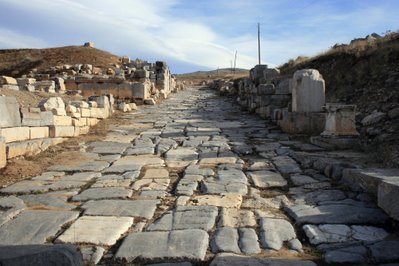
Along our way to Pisidian Antioch we paralleled the Via Sebaste, an ancient road connecting Perga to Pisidian Antioch to Iconium. The road dates back to the 6th century BC and is the road Paul would have taken on his first journey.


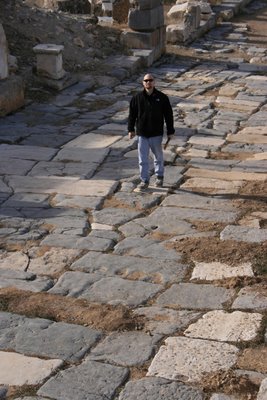
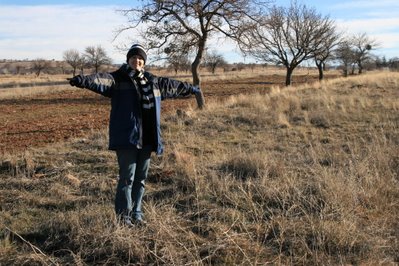
Emily standing on what is left of the Via Sebaste
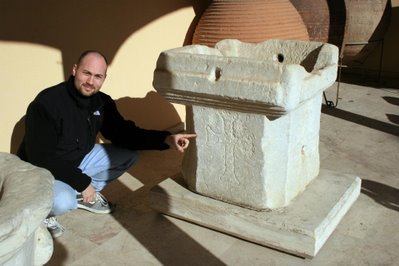
When we arrived in Pisidian Antioch we first headed to a museum of artifacts from the area.


An early infant baptistry (notice the cross)

Monday, January 01, 2007

Tarsus and Lystra

Today we left Adana and made our way to Tarsus and Lystra. Tarsus was the boyhood home of Paul and was "no ordinary city" (Acts 21:39). We're pretty confident this was Paul's hometown because Jesus Himself said it was in Acts 9:11. This city has also hosted other significant figures in history such as Marc Antony, Cleopatra, Xerxes, Darius, and Alexander the Great.


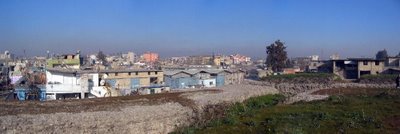
A view of modern day Tarsus.


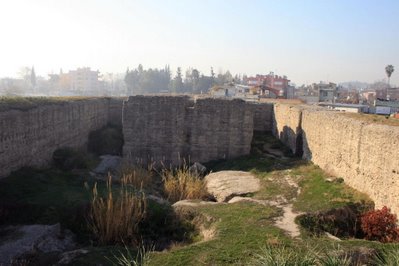
Perhaps the most impressive of the remains of Tarsus. This is all that is left of the ancient main road that ran through the center of town. The ruins just to the side are the remains of a marketplace. Paul would have traveled through here almost daily.


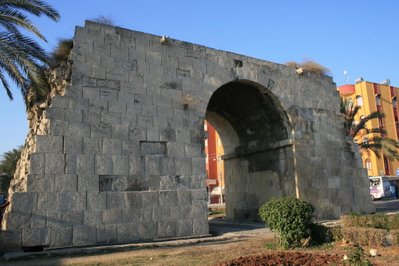
This is the old entrance to the city. It is now called the "Gate of Cleopatra" and legend says she passed through this gate on her way to marry Marc Antony.


Archeologists are unsure of what this giant ancient structure dating to 200AD is but they believe it may be some sort of cult temple. The archeologist traveling with our group said there is nothing else from the ancient world of this magnatude in all of Turkey.


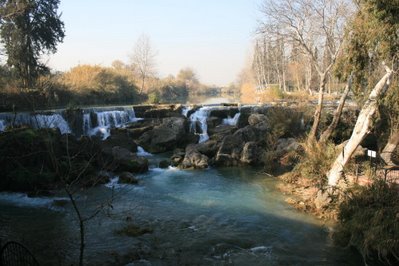
The Kidnis river is where Alexander the Great bathed and caught an illness that almost killed him in 333 BC. It is also the river that Paul would have played in as a child.

After leaving Tarsus we traveled through the Cilician Gates which aren't actual gates but a very narrow passage through the Tarsus mountains. Paul would have traveled through here with Silas on his 2nd and 3rd missionary journeys. Many other famous historical figures would have traveled through here as well.

Unfortunately I don't have a picture to post but I will say this; I was completely amazed at how difficult the travel was to get from Tarsus to Iconium. The mountain passage was extremely rugged and difficult followed by foothills and plains of equally tough terrain. Realizing that what took us 3 hours to drive through probably took a week's worth of difficult travel made me really begin to appreciate the hard work and dedication that Paul was willing to endure to spread the message of Jesus.

After driving several hours we passed Iconium (where we are staying tonight and visiting tomorrow) and went to visit Lystra. I was very excited about visiting Lystra because it's one of my favorite places Paul visited in all his journeys.

Paul visited Lystra on both his 1st and 2nd journeys and here are the main events that took place in this tiny little town:

1. Paul miracously heals a man lame from birth.

2. Paul and Barnabas are worshiped as they are thought to be Zeus and Hermes in the flesh.

3. Paul is stoned to death and raised from the dead.

4. Paul recruits and circumcises Timothy who becomes his protege and the receipient of two personal letters.

5. The church here is one of the intended receipients of the letter to the Galatians.


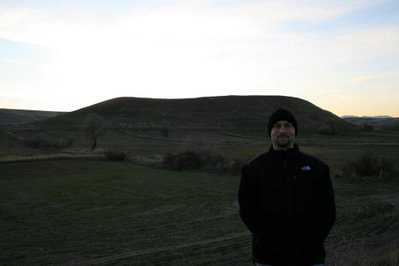
However what I didn't know is that while archeologists have found very strong proof that this is the location of Lystra, it has yet to be excavated. So when we arrived, this is what we saw:

It's not a hill but rather a tell (an archaeological site in the form of an earthern mound that accumulates from mineral buildup over time) that covers modern day Lystra.


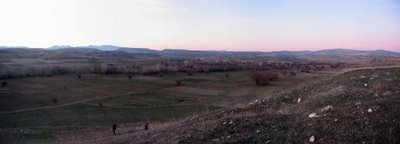
Here is the view from the top.


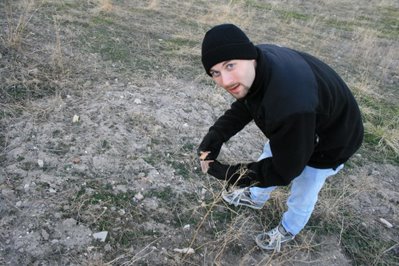
Me playing archeologist. I'm actually holding several pottery shards I found. I don't know how old they are but they looked very old.

Sunday, December 31, 2006

Antioch on the Orontes and Seleucia

We started out day in Antioch on the Orontes (also known as Syrian Antioch). What an incredible experience to be in this city, so rich in Christian history. Antioch was the hub of Paul's missionary activities, his journeys usually started and ended here, his commissioning church was here, he confronted Peter here (Galatians 2), he took rest here between trips, the letter with the result of the Jerusalem council was addressed to the people here, many believe Matthew wrote his gospel from here, Paul likely wrote his letter to the Galatians from here, and it was the first place the word "Christian" was ever used.

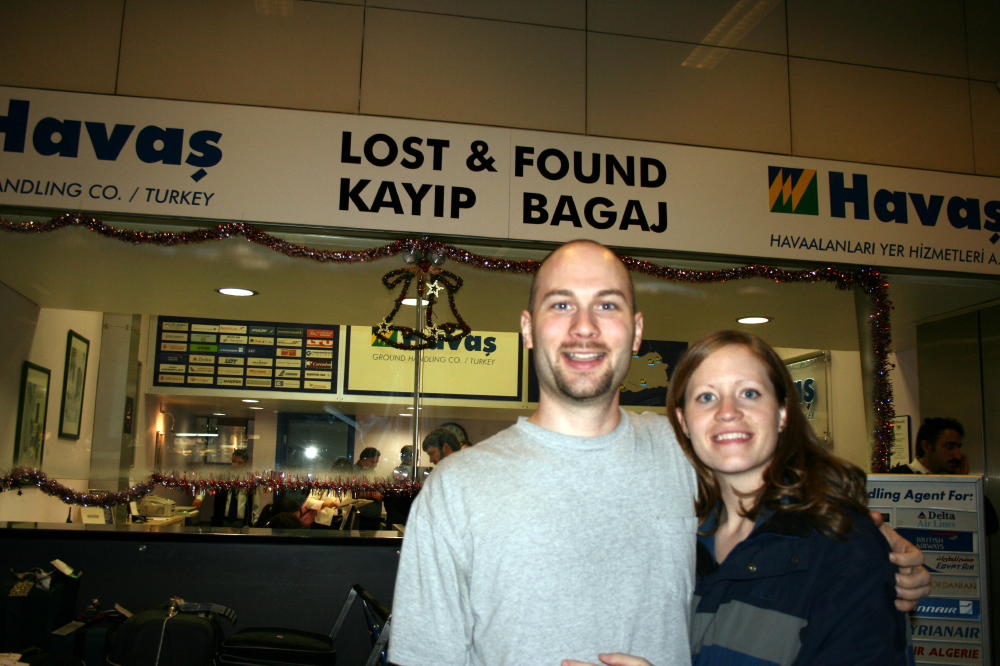
P.S. You'll be glad to know our bags finally arrived this morning.


The city of Antioch looks much different today than it did in Paul's time.


The Orontes River flows through the center of Antioch as it did in Paul's day.


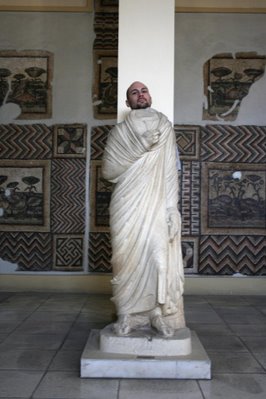
We spent some time studying artifacts at the museum in Antioch.


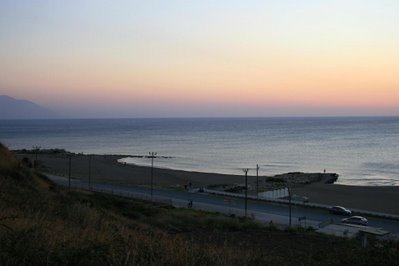
We then made our way about 25 miles Southwest to Seleucia. Seleucia is the port city where Paul and Barnabas set sail for Cyprus on their first missionary journey.

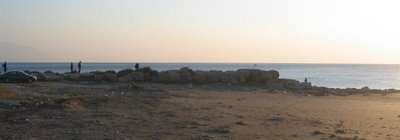
The two inlets into the sea are all that remains of this ancient seaport.


As we walked along the ancient seaport I looked out to sea thinking about Paul and Barnabas doing the very same thing some 2000 years ago, wondering what God had in store for them on their journey.


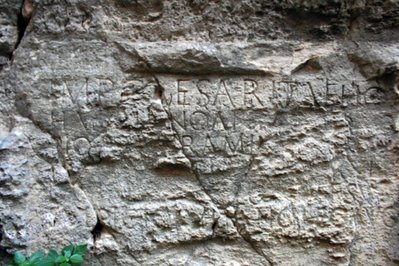
This is the inscription of the Emperor when Titus' tunnel was completed in 72 AD.

Saturday, December 30, 2006

Greetings From Istanbul!!!

We finally made it here… Well kind of. Emily and I and all our classmates made it but our bags didn’t. Last I heard all of our bags (yes all 40 from our entire group) were somewhere between London and Adana, Turkey. Although we’ve been wearing the same clothes now for over 48 hours, our spirits are sky high as we prepare to study firsthand the journeys of the Apostle Paul.


We spent the today (the 30th) in Istanbul. It was freezing cold but we saw several amazing sites in the only city in the world that spans two continents.

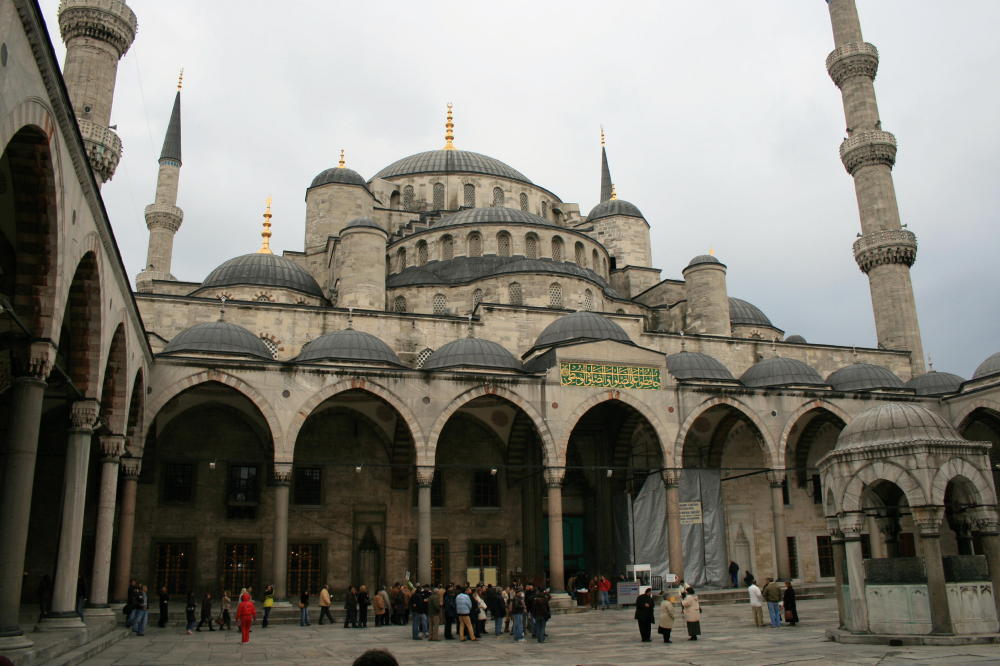
The Blue Mosque (named for the tiles on the inside and not the outward appearance) was a bit of a let down. I had heard so much about it but when we were actually there it seemed to be more for tourists than a Muslim place of worship. Interestingly enough myself and a fellow student, Onsi, both felt a significant lack of a feeling of demonic oppression than we had felt at other mosques before.


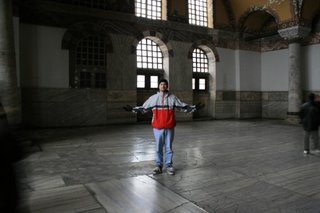
We then visited the Hagia Sophia (the center of the Eastern Church for a thousand years). It was sad to see how much destruction of the church had taken place when it was converted into a Mosque in 1432 (it is now a museum). However the history of this building is amazing. Of the 7 Ecumenical councils, numbers 5 and 6 took place here. It was also the first basilica to have a single domed roof.


The Ecumenical Councils took place right here
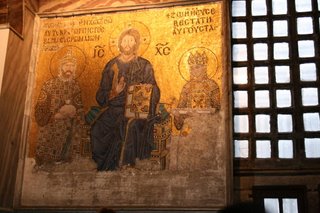
The mosaics on the walls (many of which were covered up by plaster when the basilica was converted to a mosque) are absolutely stunning. This picture is made up of thousands of single colored pieces of glass.


We caught a late flight and headed 350 miles south to Adana, the 4th largest city in Turkey. Tomorrow we’ll see Antioch (Paul’s base of operations and the first place the word “Christian” was used) and Seleucia (the port Paul and Barnabas sailed to Cyprus on their first journey).