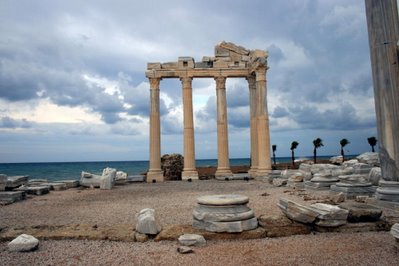
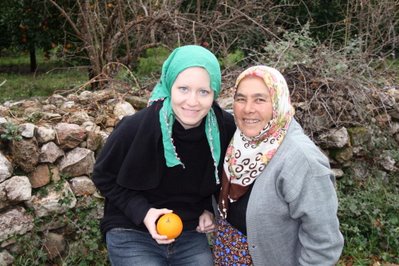
Monday, January 15, 2007

Pergamum

It’s been 5 days since we had internet access so I have a lot of posting to do…..

Yesterday we spent the night in a beautiful hotel on the Aegean Sea in the city of Assos. Unfortunately it had no internet so I couldn’t post any photos.

We had spent the day in the last of the seven churches of revelation, Pergamum.
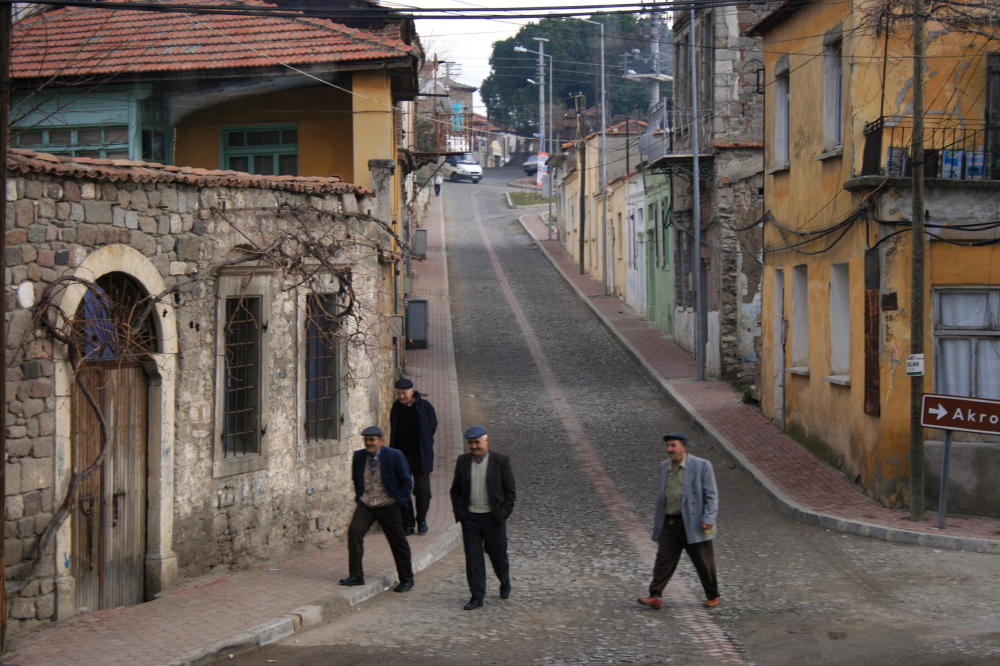


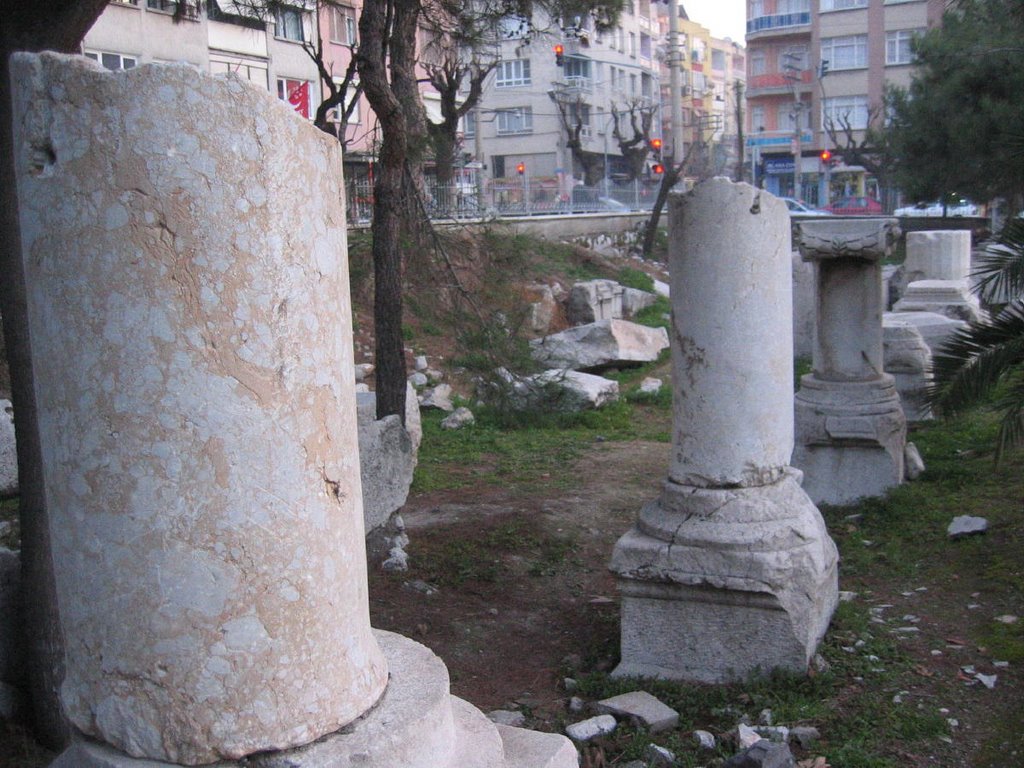
Like most cities in Turkey, the modern city is built over the remains of the ancient one. This is modern Pergamum, a beautiful little cobblestone town.
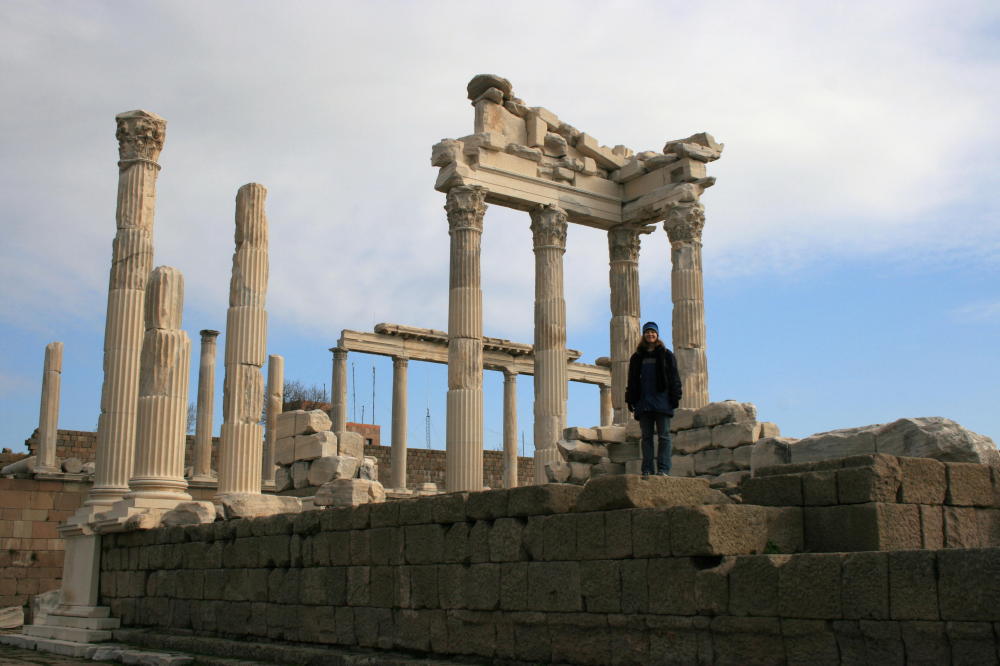


These are the remains of the temple the Emperor Trajan had built for himself to be worshiped as a god. There is a nearby inscription that reads “Lord of the land and the sea.”


There is a building called the Red Hall dating back to the 2nd century AD. It was built under Emperor Hadrian and was a Temple dedicated to the Egyptian Gods. Pergamum had quite a relationship with Egypt. Especially since it’s library was second only to Alexandria’s. The citizens of Pergamum are also the one’s that mastered the use of parchment (goatskin) manuscripts.
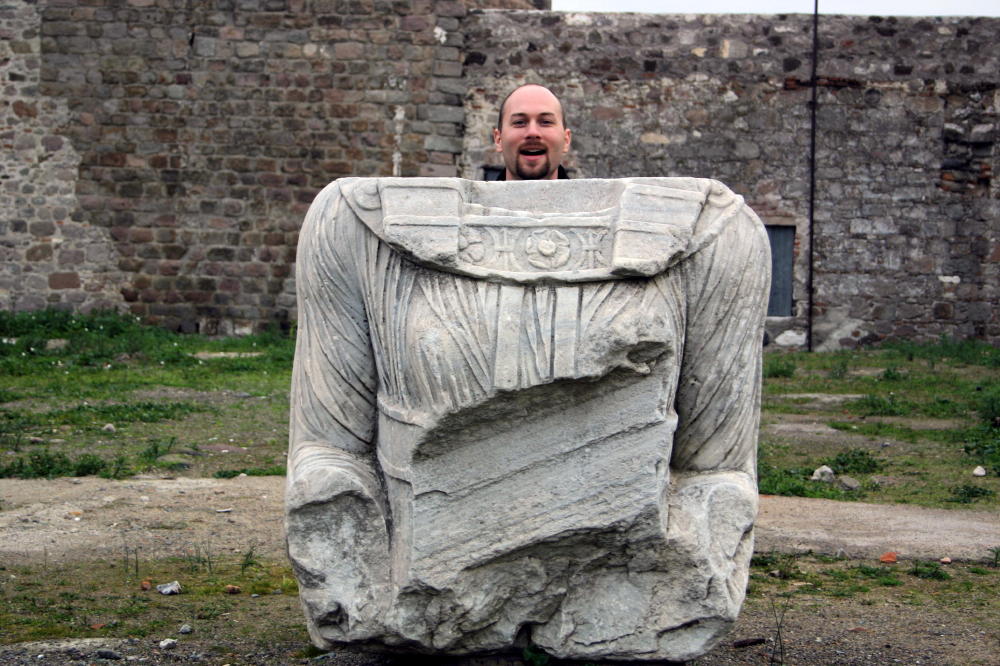


This is the remains of one of the Egyptian god’s statues.


The excavated remains of a banquet room.

Tuesday, January 09, 2007

Sardis, Philadelphia and Thyatira

Today we went to Sardis, Philadelphia and Thyatira ; three of the churches from the book of Revelation. Philadelphia and Thyatira have hardly any excavation done and most of Sardis’ ruins are reconstructions from the remains so there aren’t many interesting photographs to share.


Sardis - Reconstructed gymnasium dating to 2nd century AD.


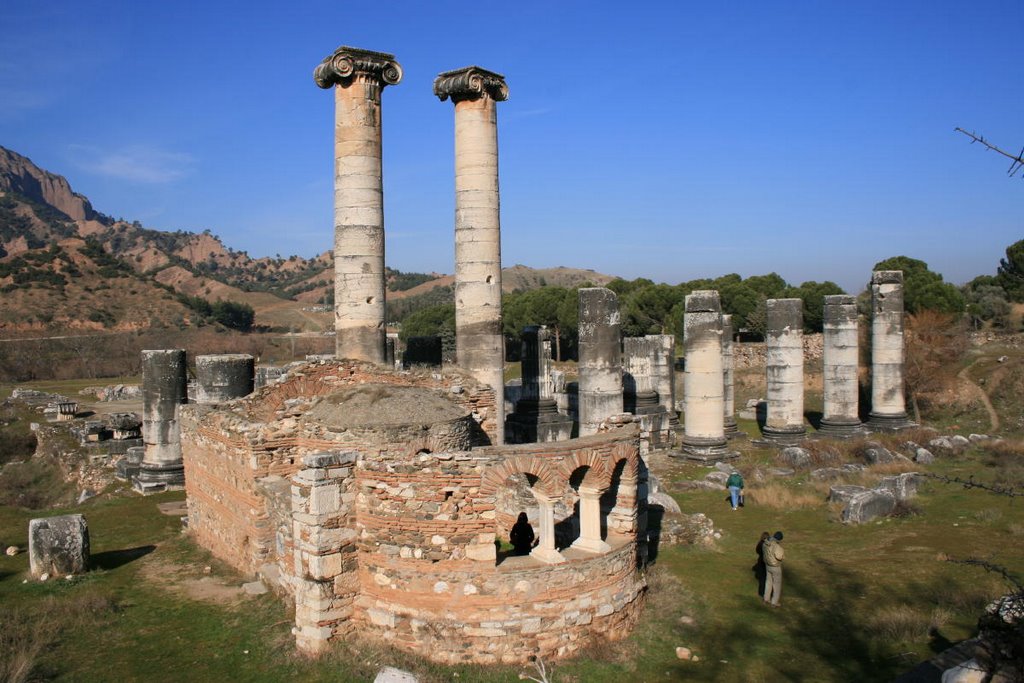
Sardis - Temple to Artemis with a church dating to the 4th century AD right next to it.


Sardis - Bema Seat – In a synagogue there were two bema seats. One was used to decide civil matters (as Jews didn’t use courts) and the other is the bema of Moses, used to read the Torah.


Philadelphia – Large unexcavated stadium.


Thyatira – “Him who overcomes I will make a pillar in the temple of my God…” -Revelation 3:12a

Monday, January 08, 2007

Smyrna (Modern Izmir)

***Emily has been battling a very bad cold, would you please take a few seconds to pray for her? We'd greatly appreciate it.***

We spent today in the third largest city in Turkey, Izmir. Izmir used to be known by a differnet name, Smyrna. The same Smyrna referred to as the "suffering church" in Revelation chapter 2.

In addition to claiming to be the birthplace of Homer (of Iliad and Odyssey fame) Smyrna is also well known for being the location that Polycarp, a disciple and friend of the disciple John, was the Bishop for over 40 years. It was also the place he was martyred (first by burning and when that failed, by stabbing).

Just before he was executed he was given one last chance to spare his life and denouce Christ, in response he said:

"For 86 years I have served [Christ] and he has done me no wrong, how can I blaspheme my King who saved me?"


The agora (marketplace) of ancient Smyrna.


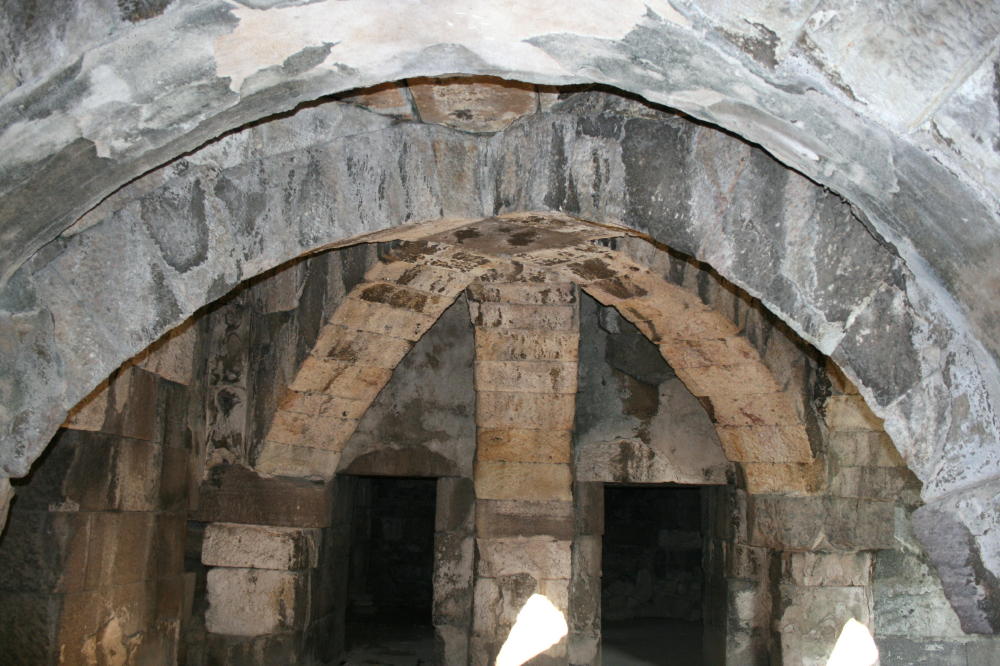
Beautiful archways under the agora (marketplace).


This is the best preserved Roman road in all of Asia Minor.


View of modern day Smyrna (Izmir). This is also the place where the old theatre used to be and where Polycarp was martyred.

Sunday, January 07, 2007

Ephesus

Playing one of the most important roles in the expansion of the early church, Ephesus was an amazing city to visit. Even though Acts 19 and Revelation 2 give us some great information about this city, I never really realized just how much happened here. Paul (on his 2nd and 3rd journeys), Apollos, Aquila and Pricilla ministered here, 1st Corinthians, John's Gospel along with, 1, 2, and 3 John were all written from here. Paul taught his “seminary” here in the lecture hall of Tyrannus for two years where future church planters such as Epaphras, Tychius , Trophimus, Philemon and Archippus were trained. These men planted churches in Colossae, Laodicea, Hierapolis, and the seven churches in Revelation. The 3rd Ecumenical Council which defeated Nestorianism and established the hypostatic union (2 natures, 1 person) took place as well as so much more.


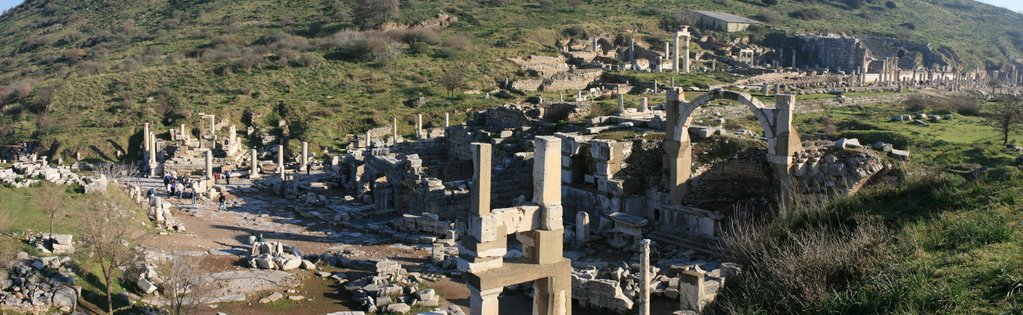
The city of Ephesus is sectioned out with the upper and lower sections. This is a photo of the central area looking over the fountain in the center of town, taken from the foundations of the Temple to Domitian.


These are some of the excavated terrace houses. All of these beautifully decorated rooms belong to one home with the pillars as the “living room” area.


And about that time there arose no small disturbance concerning the Way. For a certain man named Demetrius, a silversmith, who made silver shrines of Artemis, was bringing no little business to the craftsmen; these he gathered together with the workmen of similar trades, and said, "Men, you know that our prosperity depends upon this business. "And you see and hear that not only in Ephesus, but in almost all of Asia, this Paul has persuaded and turned away a considerable number of people, saying that gods made with hands are no gods at all. "And not only is there danger that this trade of ours fall into disrepute, but also that the temple of the great goddess Artemis be regarded as worthless and that she whom all of Asia and the world worship should even be dethroned from her magnificence." And when they heard this and were filled with rage, they began crying out, saying, "Great is Artemis of the Ephesians!" And the city was filled with the confusion, and they rushed with one accord into the theater, dragging along Gaius and Aristarchus, Paul's traveling companions from Macedonia. And when Paul wanted to go into the assembly, the disciples would not let him. And also some of the Asiarchs who were friends of his sent to him and repeatedly urged him not to venture into the theater. So then, some were shouting one thing and some another, for the assembly was in confusion, and the majority did not know for what cause they had come together. And some of the crowd concluded it was Alexander, since the Jews had put him forward; and having motioned with his hand, Alexander was intending to make a defense to the assembly. But when they recognized that he was a Jew, a single outcry arose from them all as they shouted for about two hours, "Great is Artemis of the Ephesians!" And after quieting the multitude, the town clerk said, "Men of Ephesus, what man is there after all who does not know that the city of the Ephesians is guardian of the temple of the great Artemis, and of the image which fell down from heaven? "Since then these are undeniable facts, you ought to keep calm and to do nothing rash. "For you have brought these men here who are neither robbers of temples nor blasphemers of our goddess. "So then, if Demetrius and the craftsmen who are with him have a complaint against any man, the courts are in session and proconsuls are available; let them bring charges against one another. " But if you want anything beyond this, it shall be settled in the lawful assembly. "For indeed we are in danger of being accused of a riot in connection with today's affair, since there is no real cause for it; and in this connection we shall be unable to account for this disorderly gathering." And after saying this he dismissed the assembly. And after the uproar had ceased, Paul sent for the disciples and when he had exhorted them and taken his leave of them, he departed to go to Macedonia. – Acts 19:23 – 20:1


This is the commercial agora where Demetrius gathered with the other craftsman and the riot began.


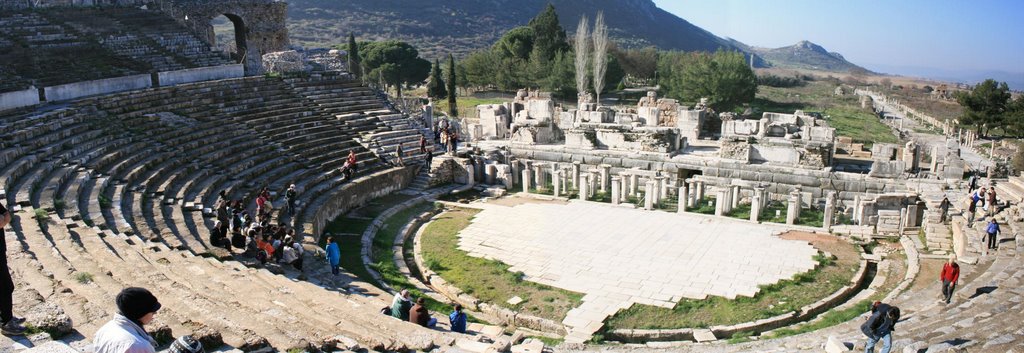
This is the theatre, about 150 yards away where the entire town gathered until the city clerk could calm them.


This is the Church of Mary, the traditional site of the 3rd Ecumenical Council.


The only one of the 12 disciples to die a natural death, this is the tomb of John, caretaker of Mary, exile from Patmos, loved by Jesus.

Saturday, January 06, 2007

Didyma, Miletus, and Priene

Today started off with a three hour bus ride in the early morning towards the Aegean coast of Turkey. For those that have been keeping track, our journey thus far has looked something like this:


We finally arrived in the early afternoon at our first stop; the ancient city of Didyma where we visited an ancient temple of Apollo.


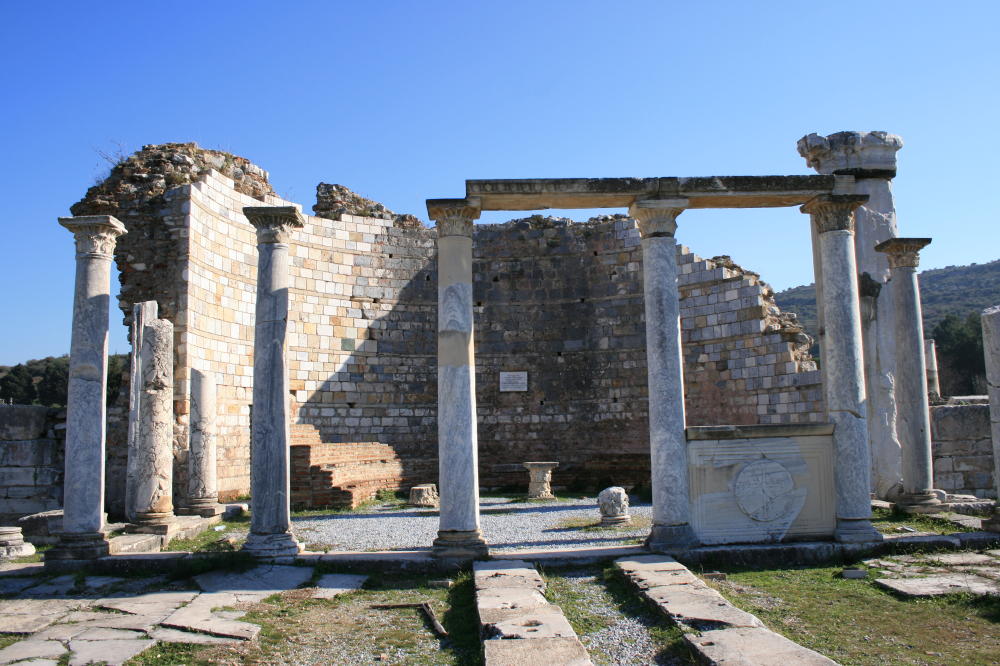
This is the inside of the temple of Apollo’s courtyard.


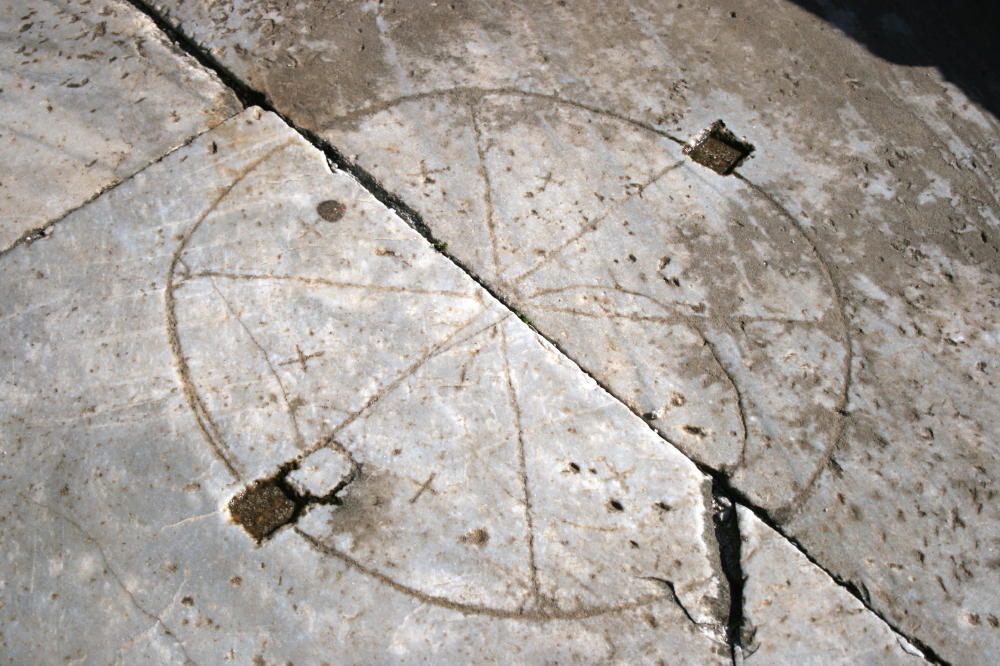
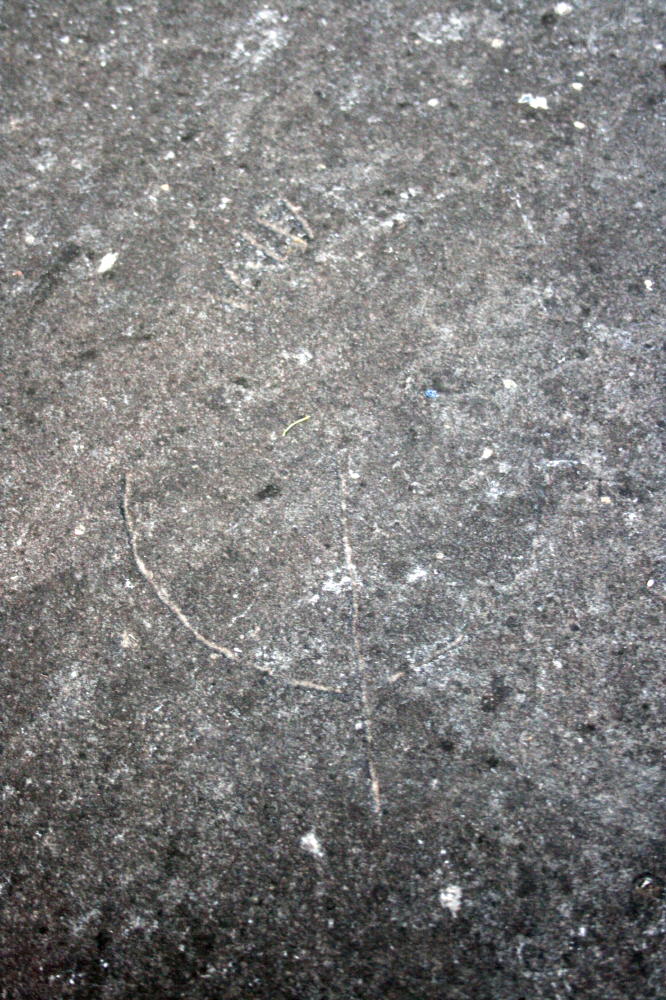
This is an early Christian symbol (similar to the fish). When placed on top of each other, the Greek letters standing for “Jesus Christ, God, Son, Savior” can be found in this symbol.


We then went over to Miletus which is found in both Acts 20:14-26 and 2nd Timothy 4:20. This is where Paul stopped at the very end of his third journey and delivered his very moving speech to the elders of the nearby Ephesian church. I had the opportunity to read the passage to our group in the Miletus theatre but won’t post the video because it’s really large and I haven’t edited it down yet.


This is what part of ancient Miletus would have looked like.


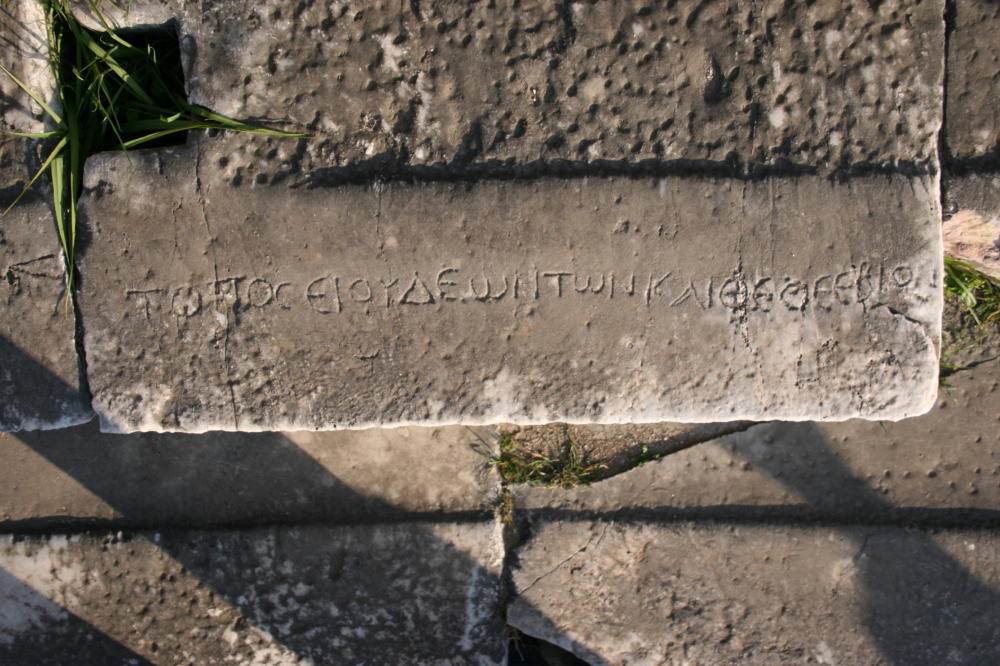
This inscription reads “Place of the Jews who are also the God fearers”


We then headed over towards ancient Priene, a small city of about 5,000 founded by Alexander the Great.


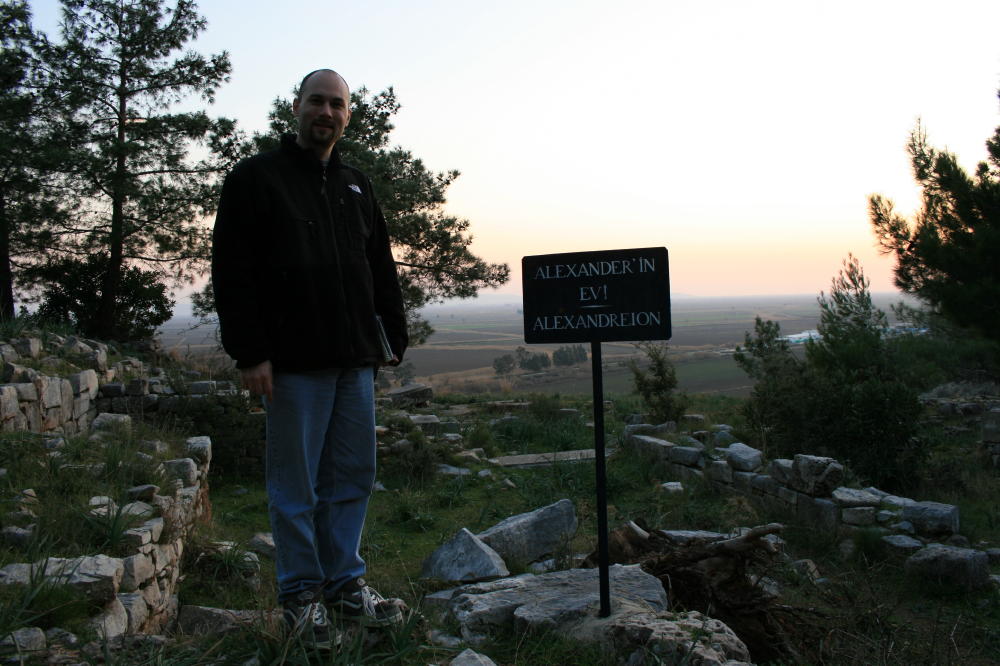
This is where Alexander the Great stayed when he visited Priene.


This Menorah is just about all that remains of an ancient house synagogue in Priene.


Friday, January 05, 2007

Laodicia and Colossae

Mentioned in Colossians 4 and Revelation 3, Laodicia was one of the seven churches singled out by Jesus in the book of Revelation. In fact it was the only one of the seven not to have anything positive said about it.

In Revelation 3 Jesus refers to the church in Laodicia as poor, blind and naked which I found interesting because the city was incredibly wealthy, produced a world famous eye salve, and was a regional leader in textile manufacturing. Of course he is referring to their spiritual state but I was most struck by the phrase “I will give him the right to sit with me on my throne” in verse 21. Those in the tiny Christian community in this city must have been awestruck to contrast that image with the huge Roman Empire they knew so well.


A very rare find, a Jewish Menorah with a cross above it chiseled into a marble column.


These are the remains of the aqueduct that brought the famous lukewarm water into the city.


I’m holding some of the piping from the aqueduct.


This is all that remains of the water tower. The water tower would redirect water from the aqueduct to various parts of the city.


Unfortunately there isn’t much to see at Colossae. It is a tell like Lystra as it hasn’t been excavated yet (which is pretty convenient for the opium farmer who currently has his farm there). But we did read through Paul’s letter to Philemon as the slave owner was a resident of Colossae.

As we read the letter I was struck by the fact that God the Father is very much like Philemon and Paul is acting very much like Jesus insofar as Onesimus is the sinner. Paul is interceding on Onesimus’ behalf to him who is rightfully owed (Philemon). Powerful.

We also talked about the fact that history places a Onesimus as the Bishop of Ephesus and many scholars think that this is the same Onesimus. This would make sense especially because many believe that Bishop Onesimus was the one who began collecting all of Paul’s letters into one central source.


Me in Colossae.


Hierapolis

Mentioned only in Colossians 4:13, the church in Hierapolis was founded by Epaphras. We known Epaphras met Paul in Ephesus but we aren’t sure how. There are three main theories that are accepted:

1. Epaphras was attending a pilgrimage to the Temple of Artemis.
2. He was a member of a civic delegation.
3. He was a merchant doing business there.

Regardless of how they met, we know that Epaphras was the primary church planter in the Lycius valley which included Hierapolis, Colossae and Laodicia (of Revelation fame).


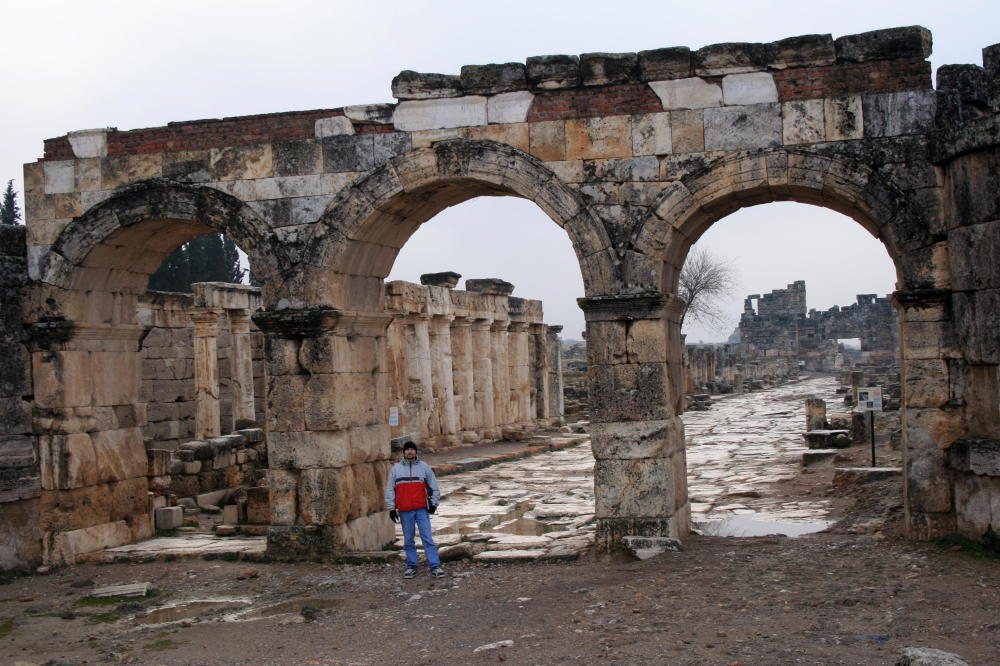
These are the main gates into the city


After Emperor Domitian died, the Senate hated him so much they demanded his name be chiseled out of every stone in the Roman Empire. (They did this with many people they didn’t like) This picture shows an example of where that happened. This helps us understand the church in Sardis would have understood and really related to Jesus’ words in Revelation 3:5 where He promises to never blot out their name from the book of life.


Can you see the Menorah at the top of the lid of this sarcophagus (ancient coffin)? We tend to think the Star of David as the standing symbol of Judaism but the Menorah was the standing symbol for over 1500 years.


Built in the 5th century AD, the Martyrion of St. Philip was erected as the final resting place of the disciple Philip. Tradition and the Apocryphal Acts of Philip state that he was executed here by upside down crucifixion.


Mandrake plants are all over Turkey. You may remember them as the fertility drug used by Leah and Rachel to barter for time with Jacob (Genesis 30). Emily and I try to steer clear of these plants.


That’s not snow but rather calcium covered thermal pools. These are the famous hot springs of Pamukkale right next to Hierapolis.

Thursday, January 04, 2007

Attalia (Modern Antakya)

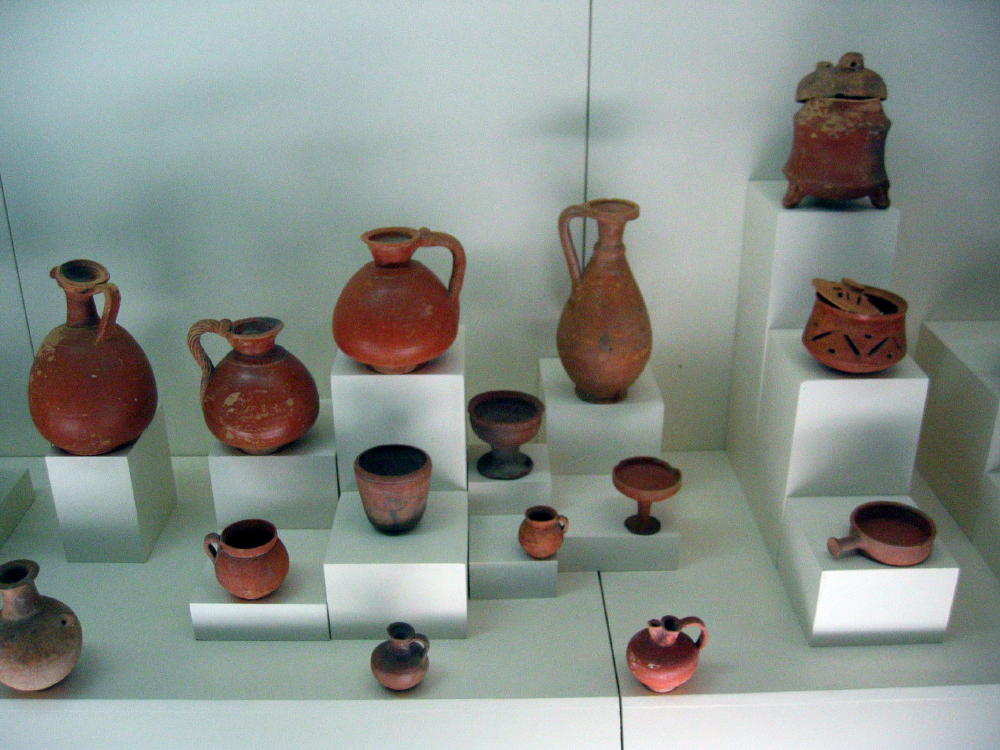
Today was mostly a travel day. It was the first morning we could sleep in (until 7:30am) and boy did we love that!!! Attalia was the port city from which Paul and Barnabas finished their first journey and sailed back to Antioch on the Orontes from. We spent the morning at a museum in Antakya that had many artificats from excavated Perga. Some of my favorites are below:
P.S. Perhaps the best news of all, I think (not positive) that I fixed the bug and you should now be able to click on photos (going forward) to enlarge them.


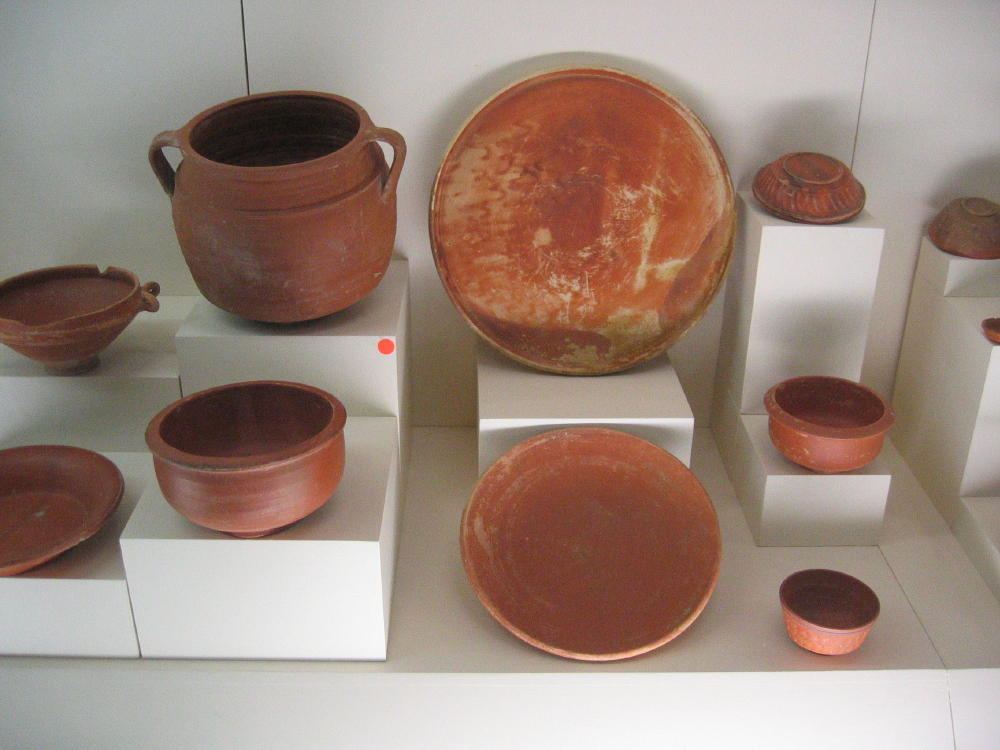
This pottery dates to Paul's time


More pottery from Paul's time.
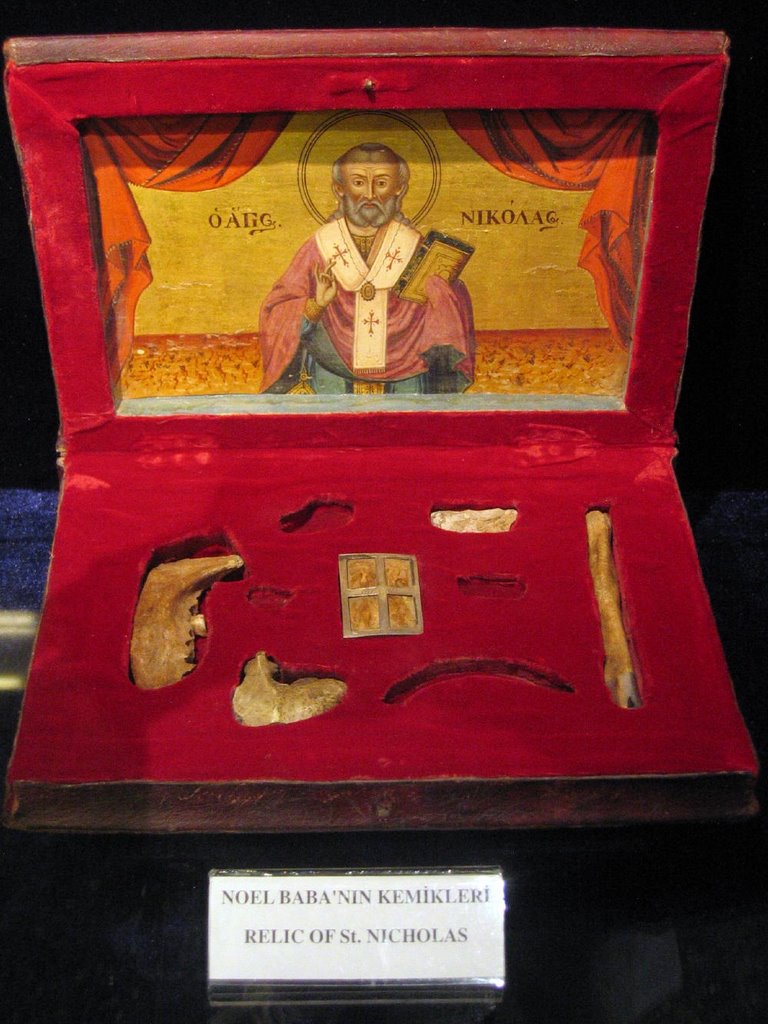


Iconography dating to the 5th century AD


The real St. Nicholas lived in Myra, not to far from Attalia. Here are some of his, uh, "relics" (notice the jaw bone).


Our drive to Pamukkale took us through many mountains. During the drive it began to snow and at one of our rest stops we had a great snowball fight. I often forget that Paul would have had to travel through harsh conditions like this to spread the gospel.

Wednesday, January 03, 2007

Perga

“Now Paul and his companions put out to sea from Paphos and came to Perga in Pamphylia; and John left them and returned to Jerusalem.” – Acts 13:13

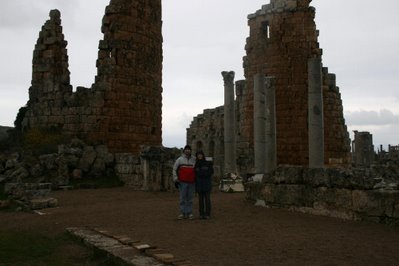
Paul and Barnabas arrived here on their first journey. Most of the remains date to the second half of first to second century so it’s beyond Paul’s time except for the main city gates, Paul definitely would have walked through them.


We're standing next to the gates Paul and Barnabas walked through at the entrance to the city.

Perga is where John Mark left Paul and Barnabas on the first journey. Historically scholars have come up with different theories as to the reason for his departure. These theories range from persecution to illness to homesickness. However our traveling archeologist, Dr. Mark Wilson, has a different theory. He believes that the conversion of Sergius Paulus in Cyprus was a turning point northward in a journey that should have taken them to North Africa. Dr. Wilson believes that Paul was originally headed to Alexandria based on the fact that Antioch on the Orontes was first evangelized by North African Christians and it had a heavy North African population so it would make sense that Paul’s commissioning church would send him there. However when Sergius Paulus became a Christian, things changed. Since Pisidian Antioch is the hometown of Sergius Paulus and he would have had major connections there. (This also helps explain why Paul and Barnabas didn’t evangelize in Perga during their first trip through here like they did in other cities but rather they went straight through to Pisidian Antioch). Dr. Wilson believes that John Mark may have left Paul and Barnabas in anger because he wanted to go to North Africa and not Pisidian Antioch. (This would also correlate with church history stating that John Mark later went on to evangelize and was subsequently martyred in Alexandria). While there’s no way to be sure either way, I think it makes for an interesting theory.

Although many ruins are post-Paul (just barely) it is clearly a very social culture. I can easily picture Paul discussing theology and evangelizing in a public bathhouse. The agora (marketplace) is such an integral part of the city, there is no other conclusion to make but that Paul was a street evangelist.


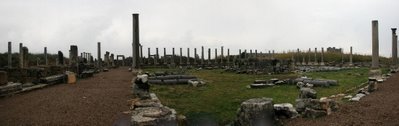
The agora at Perga.


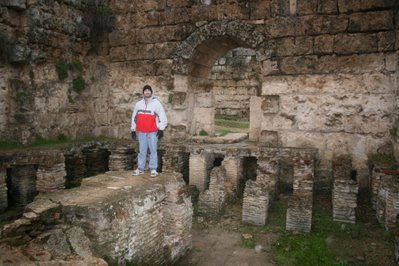
Remains of a bathhouse.


Looking at everything and picturing it complete with roofs, covered in marble, etc, I can see how beautiful these cities were. We have nothing like them in today’s world. It’s definitely our loss.


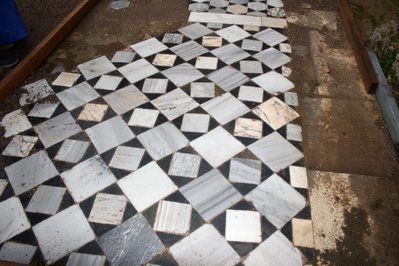
This is the floor of the bathhouse. The entire city was covered in various marble patterns.

Side and Aspendos

We stopped by three sites today. The first two were Side (pronounced "See - Day") and Aspendos. Although not directly mentioned in the Bible, these two sites have much to offer in the way of ancient ruins of Paul's day.

Side, an ancient major seaport, is a place Paul likely visited at some time. If he didn't stay here, he most likely saw it from a distance during his sail to Rome.


The beautiful ancient seaport of Side on the Mediterranean.
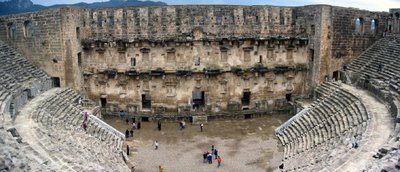

After spending time in Side we traveled a few dozen miles to Aspendos. Aspendos has the best preserved theatre in all of Asia Minor. Built under Marcus Aurelius between 161 - 180 AD, this theatre is so well preserved that it is still in use today. Emily, myself and some of my classmates performed a song here to test the acoustics. They were amazing.


Here's the view from the top of the theatre.
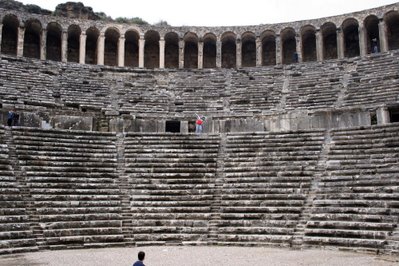
Here is the view from the stage. I'm the red dot in the center.

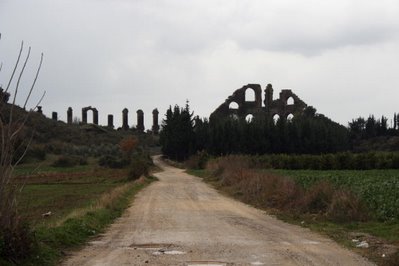
The remains of the Roman aqueduct are amazing.

Here's Emily being conned, er... acting like a local.